
In high-stress aerospace environments, specialty steel stands apart by combining exceptional strength, fatigue resistance, thermal stability, and precise metallurgical control. For technical evaluators, understanding how alloy design, heat treatment, cleanliness, and certification readiness influence real-world performance is essential when comparing materials for critical structural and engine-related applications.
Specialty steel is different in aerospace because performance depends on more than high strength alone. The material must survive cyclic loading, temperature variation, corrosion exposure, tight dimensional tolerances, and strict certification demands without unpredictable failure.
For technical evaluation teams, the real question is not whether a steel grade looks strong on a datasheet. The real question is whether its metallurgy, processing route, and quality consistency support safe long-term performance in demanding aerospace service.
Why aerospace applications demand more from specialty steel
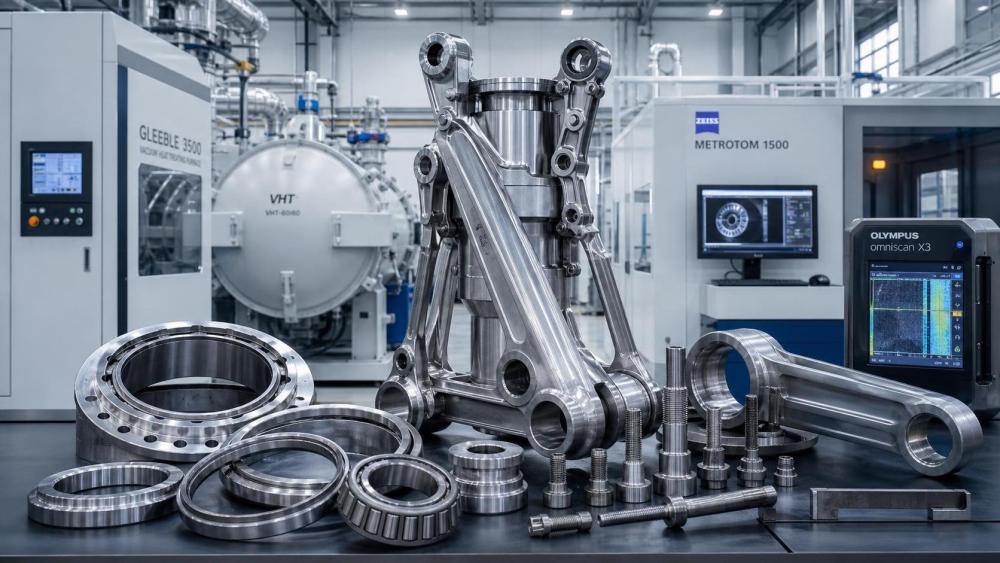
Aerospace components operate in conditions where stress is rarely simple or constant. Landing loads, vibration, pressure cycling, thermal gradients, and corrosive environments can interact and create failure modes that standard industrial steels cannot reliably resist.
That is why specialty steel is used in landing gear, shafts, fasteners, bearings, springs, structural fittings, and selected engine-related systems. These parts need controlled strength, fracture toughness, fatigue life, and dimensional stability under tightly defined operating conditions.
In this context, specialty steel refers to steel engineered for critical performance rather than commodity use. Its value comes from carefully balanced alloy chemistry, refined microstructure, clean melting practice, controlled heat treatment, and dependable certification support.
For a technical evaluator, this means material selection should focus on total performance integrity. Mechanical properties matter, but they must be considered together with defect control, process repeatability, machinability, inspection response, and supply chain confidence.
What makes specialty steel different at the metallurgical level
The main difference begins with alloy design. Specialty steel is built to achieve a targeted combination of hardness, strength, toughness, fatigue resistance, corrosion resistance, and thermal response, rather than optimizing a single property at the expense of others.
In aerospace, common specialty steel families include martensitic steels, precipitation-hardening stainless steels, maraging steels, bearing steels, and high-strength low-alloy systems. Each family supports a different stress profile, fabrication route, and service environment.
Maraging steels, for example, deliver ultra-high strength with relatively good toughness because strengthening comes from precipitation during aging rather than from high carbon content alone. That helps reduce brittleness risk in highly loaded aerospace structures and tooling.
Precipitation-hardening stainless steels are valued where high strength and corrosion resistance must coexist. Grades such as 15-5 PH or 17-4 PH can support structural aerospace uses when proper heat treatment, cleanliness, and toughness requirements are validated.
Specialty bearing steels are another example. In aerospace bearings and rotating systems, steel must offer wear resistance, rolling contact fatigue strength, and microstructural stability. Small inclusions, segregation, or heat treatment variation can sharply reduce service life.
This is why specialty steel cannot be evaluated only by nominal composition. Two materials with similar chemistry may perform differently if melting practice, remelting route, forging reduction, cleanliness, carbide distribution, or heat treatment control are different.
Why cleanliness and defect control matter so much
In high-stress aerospace service, microscopic defects can become macroscopic failures. Non-metallic inclusions, porosity, segregation bands, coarse carbides, and surface decarburization may all act as crack initiation points under cyclic or impact loading.
Specialty steel producers reduce these risks through process routes such as vacuum induction melting, vacuum arc remelting, or electroslag remelting. These methods improve cleanliness, chemical homogeneity, and internal soundness compared with less controlled production paths.
For technical evaluators, this matters because fatigue life is often more sensitive to cleanliness than to headline tensile strength. A steel with slightly lower strength but superior inclusion control may perform better in a mission-critical aerospace application.
Fracture toughness also depends heavily on internal quality. High hardness without microstructural uniformity can create dangerous brittleness, especially in thick sections or complex geometries where local stresses rise above average design assumptions.
Supplier data should therefore include more than standard mechanical test values. Useful evaluation inputs include cleanliness ratings, ultrasonic inspection capability, grain size control, remelting method, macroetch quality, and evidence of stable batch-to-batch performance.
How heat treatment defines real aerospace performance
Heat treatment is where the potential of specialty steel is turned into usable aerospace performance. The same steel grade can behave very differently depending on quenching practice, tempering sequence, aging conditions, atmosphere control, and section thickness.
For example, an ultra-high-strength steel may reach impressive hardness, yet lose toughness or stress corrosion resistance if tempering is not properly optimized. A precipitation-hardening grade may miss design targets if aging treatment is uneven or poorly controlled.
Technical evaluators should examine whether the supplier can manage not only the metallurgy but also the thermal process window. Nadcap-aligned heat treatment capability, furnace calibration discipline, traceability, and distortion control all influence final part reliability.
Residual stress is another factor that is often underestimated. Improper heat treatment or machining sequences can leave internal stresses that reduce fatigue life, increase distortion, or interact with service loads in ways that shorten component life.
When specialty steel is chosen for aerospace, the evaluation should connect alloy selection with post-processing reality. The question is not only what the steel can achieve in theory, but what it consistently achieves after the full manufacturing route.
Which performance criteria matter most in high-stress aerospace use
Strength is important, but it is rarely the sole decision factor. Aerospace applications usually require a balance of tensile strength, yield strength, elongation, reduction of area, fracture toughness, hardness, and resistance to cyclic crack initiation and growth.
Fatigue resistance is especially important because many aerospace parts fail through repeated stress cycles rather than one-time overload. Landing gear components, fasteners, shafts, and springs may experience millions of cycles over their service life.
Thermal stability also matters. Even when specialty steel is not exposed to turbine-level temperatures, aerospace structures often see elevated temperatures, rapid thermal transitions, and localized heating that can change hardness or dimensional behavior over time.
Corrosion and stress corrosion resistance can be equally decisive. Moisture, deicing chemicals, salt exposure, hydraulic fluids, and maintenance environments all affect long-term durability. A stronger steel may be the wrong choice if environmental cracking risk is higher.
Wear resistance and contact fatigue performance matter in bearings, actuators, and moving interfaces. Here, surface integrity, hardness profile, retained austenite control, and tribological behavior can influence reliability more than bulk strength alone.
For technical evaluators, the best approach is to rank properties by actual failure risk in the intended application. This avoids the common mistake of selecting specialty steel based on one attractive number while ignoring the dominant service damage mechanism.
How to compare specialty steel grades more effectively
Effective comparison starts with the operating environment. Evaluators should define load type, peak stress, cyclic stress range, temperature exposure, corrosion conditions, required life, inspection interval, and allowable failure consequences before reviewing candidate materials.
Next, compare specialty steel grades by application fit rather than general reputation. A maraging steel, a precipitation-hardening stainless steel, and a high-strength low-alloy steel may all look viable, but each carries different tradeoffs in toughness, corrosion, and processing.
Processing compatibility is a practical filter. Can the material be forged, machined, welded, coated, ground, or heat treated within the existing production system? Some specialty steel grades offer strong properties but impose high manufacturing complexity or inspection burden.
Section size sensitivity should also be checked. Mechanical values from small test coupons may not transfer directly to large forgings or thick cross-sections. Hardenability, cooling rate sensitivity, and core-to-surface property variation can change actual component behavior.
Surface treatment compatibility matters as well. Shot peening, nitriding, plating, passivation, or coating systems may improve performance, but they must match the chosen specialty steel and aerospace specification framework without introducing hydrogen embrittlement or distortion risk.
Finally, ask whether the supplier can support technical documentation that matches aerospace procurement reality. Mill certifications, heat treatment records, testing standards, traceability systems, and application references often determine whether a promising material is truly usable.
What technical evaluators should ask suppliers before approval
Supplier discussions should go beyond price and nominal grade availability. In aerospace, approval depends on how confidently a supplier can demonstrate metallurgical consistency, process discipline, compliance readiness, and application-specific understanding.
Important questions include which melting and remelting route is used, how inclusion control is measured, what nondestructive testing standards are available, and whether the supplier has experience with aerospace-grade specialty steel for comparable load cases.
Evaluators should also ask for evidence of heat treatment capability, batch traceability, dimensional stability control, and deviation management. A supplier that can explain failure prevention methods clearly is often more reliable than one offering only basic datasheets.
It is also useful to review statistical consistency. One excellent batch does not guarantee stable production. Long-term capability data, rejection history, and certification readiness can reveal whether the supplier can support program-scale aerospace requirements.
From a procurement and risk perspective, supply resilience matters. Technical performance is necessary, but source concentration, raw material volatility, export controls, and lead-time sensitivity can all affect program execution if the specialty steel is difficult to secure reliably.
Common evaluation mistakes when selecting specialty steel
One common mistake is treating specialty steel as a simple upgrade from conventional steel. In reality, higher strength can introduce new risks, including reduced toughness, machining difficulty, greater sensitivity to surface defects, or stricter heat treatment requirements.
Another mistake is overreliance on catalog values. Datasheet numbers are useful screening tools, but they do not replace application-specific validation. Fatigue performance, fracture behavior, and environmental resistance depend on geometry, surface state, and processing history.
Some teams also underestimate the role of certification and documentation. A technically suitable specialty steel may still create qualification delays if traceability, testing protocols, or aerospace compliance records are incomplete or inconsistent across lots.
There is also a tendency to focus on material cost rather than total system cost. A lower-cost steel may increase machining time, scrap risk, inspection burden, or field failure exposure. In aerospace, those downstream costs often outweigh initial price differences.
Finally, evaluators sometimes separate metallurgical review from supply chain review. That is risky. The best specialty steel choice is one that delivers both material performance and dependable industrial execution across qualification, production, and service support stages.
Why specialty steel remains strategically important in aerospace
Advanced titanium and nickel alloys receive much of the attention in aerospace, but specialty steel remains essential where high strength, fatigue resistance, wear behavior, manufacturability, and cost-performance balance must come together in critical components.
It continues to play a major role in landing systems, transmission elements, fastener platforms, tooling, bearing assemblies, actuator components, and selected structural applications. In many of these areas, no simple material substitution offers the same industrial balance.
For technical evaluators, the key insight is that specialty steel is not defined by one premium property. It is defined by controlled metallurgy translated into reliable service behavior under real aerospace stresses, with qualification evidence that supports engineering confidence.
When reviewing candidate materials, the strongest decision framework combines alloy design, cleanliness, heat treatment response, fatigue behavior, environmental resistance, manufacturability, and supplier capability. That is what separates a valid aerospace material choice from a theoretical one.
In short, specialty steel is different in high-stress aerospace applications because it is engineered and qualified as a performance system, not just a metal grade. That systems view is what helps technical teams make better material decisions and reduce program risk.
Related News
- Nickel-Cerium Alloy Selection Criteria for High-Temperature Aerospace ComponentsSep 11, 2026Nickel cerium alloys boost thermal stability & oxidation resistance in jet engine hot sections—discover key selection criteria for aerospace reliability.
- Alloy Characterization Methods: Choosing Tests for Aerospace Material QualificationSep 11, 2026Alloy characterization methods for aerospace qualification: select chemistry, microstructure, mechanical, NDT, and environmental tests that prove service-ready performance.
- Non-Ferrous Alloy Applications: Matching Materials to Aerospace, EV, and Marine LoadsSep 10, 2026Non-ferrous alloy applications for aerospace, EV, and marine loads: compare aluminum, titanium, nickel, copper, and magnesium for durable, verified material choices.
- Which Corrosion Resistance Standards Apply to Aerospace Metals and Coatings?Sep 09, 2026Corrosion resistance standards for aerospace metals and coatings: compare ASTM, MIL, ISO, and qualification requirements for reliable, compliant performance.