
A low electricity or gas price is not, by itself, a cost-effective procurement outcome for a metallurgy business. That is the central mistake behind many energy tenders. A contract can look attractive on a price-per-unit basis and still raise total production cost through poorly matched load terms, imbalance charges, curtailment exposure, weak renewable documentation, or a supply structure that does not fit the plant’s actual operating rhythm.
For advanced materials producers, energy is tied directly to metallurgical control. A titanium melting facility, aluminum extrusion plant, precision casting operation, powder metallurgy line, heat-treatment shop, copper foil producer, and rare earth magnet manufacturer do not consume energy in the same way. Their furnaces, presses, atomizers, sintering systems, rolling mills, vacuum equipment, and thermal cycles create very different demand profiles. Good metallurgy energy procurement begins with that operational reality rather than with a generic utility comparison.
Business evaluators therefore need to assess energy as a total-cost and continuity issue: what is paid for power or fuel, when it is consumed, how reliably it arrives, what it does to material quality, and whether the contract remains workable when production volume or regulations change.
The cheapest tariff can be the most expensive production decision
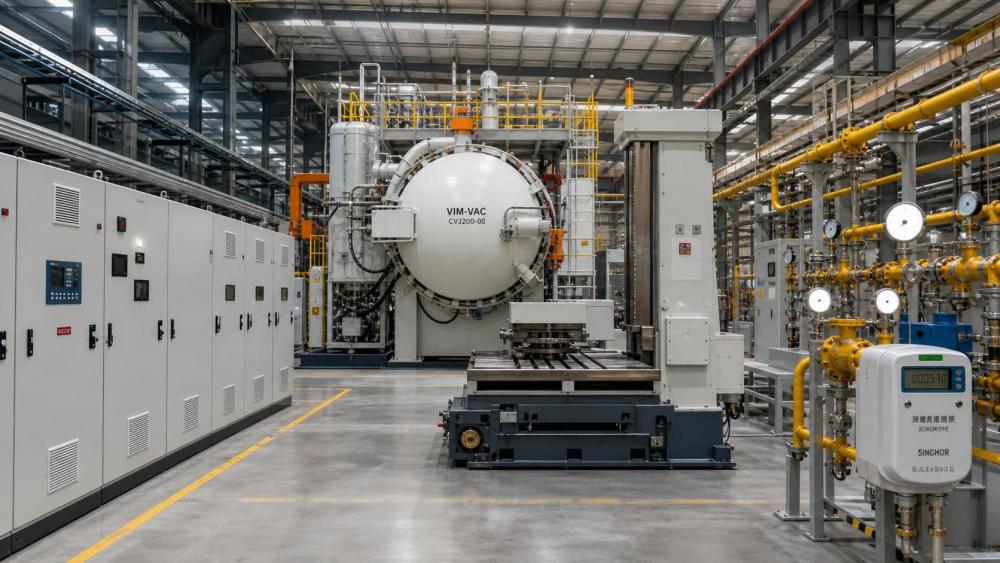
Metallurgy plants often have energy loads that cannot be casually moved. Vacuum induction melting, electroslag remelting, controlled-atmosphere heat treatment, powder sintering, and some high-temperature alloy processes may require long, stable cycles. Interrupting or aggressively rescheduling them can create scrap, requalification work, delayed shipments, or inconsistent mechanical performance. In these settings, a cheaper tariff that depends on frequent demand response may have limited practical value.
This is especially relevant for high-performance materials. A nickel-based superalloy or aerospace-grade titanium product is not judged only by chemistry. Buyers may also care about microstructure, inclusion control, fatigue behavior, creep resistance, traceability, and heat-treatment consistency. Energy procurement cannot be separated from the process controls that support those outcomes. If reduced energy spend increases thermal variability or makes furnace scheduling unreliable, the savings may disappear in the cost of rejected material, downstream machining difficulty, or delayed customer approval.
The same principle applies at lower temperature. Aluminum extrusion depends on coordinated billet heating, die management, press availability, quenching, and aging. Copper foil production can have highly sensitive rolling and surface-treatment stages. A plant should not evaluate a tariff in isolation from the production bottleneck. The relevant question is not “What is our energy price?” but “What does this supply arrangement do to cost per conforming tonne, part, or metre of saleable output?”
Start with the real load profile, not the annual consumption number
Annual consumption is useful for budget planning, but it is a blunt instrument for contract selection. A metallurgy energy procurement review should map at least four things: baseload demand, peak demand, batch-process loads, and flexible loads. The distinction matters because suppliers and network operators may price these elements differently, while a plant’s ability to adjust them is rarely uniform.
Baseload may include ventilation, water treatment, compressed air, safety systems, controlled storage, and equipment that must remain available around the clock. Batch loads may come from melting, solution treatment, stress relieving, forging reheats, hot isostatic pressing support systems, or sintering cycles. Flexible loads might include selected pumping, charging, non-critical finishing operations, or certain material handling tasks. Treating all of these loads as equally movable produces unrealistic savings assumptions.
A useful internal review asks production, maintenance, quality, and procurement teams to identify the load that is technically interruptible, commercially interruptible, and contractually interruptible. Those are not always the same. A furnace may be technically capable of pausing under certain conditions, yet the production team may reasonably reject the risk because of temperature uniformity requirements, customer delivery pressure, or equipment wear.
Demand spikes also deserve attention. A facility can consume a moderate amount of electricity over a year but face expensive charges because several high-load assets start or operate together. Coordinating melt-shop schedules, extrusion presses, thermal treatment lines, or large-scale finishing equipment may reduce avoidable peak exposure. This is an operational decision as much as a procurement decision; the energy contract only reveals the cost of the behavior already happening on the shop floor.
Compare contracts on landed energy cost and risk allocation
When evaluating supplier offers, decision-makers should look beyond the headline commodity component. The commercial structure can include network charges, capacity or demand charges, balancing costs, loss factors, taxes, renewable attributes, early-exit conditions, credit requirements, and indexation formulas. The exact components vary by market, but the underlying discipline is universal: identify what is fixed, what is variable, and what risk is being transferred back to the buyer.
A fixed-price agreement provides budget certainty, but it may embed a premium for that certainty and can become restrictive if output falls. A floating or indexed contract may better reflect market movements, but it exposes the buyer to price volatility. Hybrid structures can be practical where a plant has predictable baseload demand but uncertain project-driven production. There is no universally “best” choice. The better choice is the one that matches demand visibility, margin sensitivity, financial policy, and the company’s ability to tolerate adverse price movement.
A common tender weakness is comparing bids that use different assumptions. One offer may include a narrow consumption band, another may assume full flexibility, and a third may exclude charges that appear later on the invoice. Normalize the offers before ranking them. If the procurement team cannot explain the expected cost under normal output, reduced output, and high-output conditions, it does not yet have a defensible comparison.
Reliability has a measurable commercial value
Supply reliability is sometimes treated as a qualitative scorecard item, placed beside sustainability and supplier responsiveness. In metallurgy, it should be examined as an economic variable. The cost of an interruption is not limited to idle labor. It can include reheating, remelting, furnace recovery time, damaged tooling, missed shipment windows, expedited freight, and reinspection. For regulated or safety-critical applications, a disruption can also complicate process documentation and lot traceability.
The required resilience depends on the plant. A manufacturer of general industrial steel products may have a different tolerance for interruption than a supplier producing single-crystal turbine blade materials or tightly controlled aerospace forgings. Likewise, a powder metallurgy operation with a critical sintering cycle should assess backup power, fuel redundancy, and maintenance response differently from a warehouse or machining-only site.
Procurement should ask practical questions: Is the site served by a constrained grid area? Are there single points of failure in gas or electricity delivery? What happens during planned network maintenance? Does the company have tested procedures for safely protecting work in process? The answers should inform both supplier selection and internal capital planning. A cheaper contract cannot compensate for a weak continuity plan.
Carbon exposure increasingly belongs in the cost model
For many buyers of advanced metallic materials, the origin and carbon intensity of production are becoming part of supplier evaluation. This does not mean every producer must make broad environmental claims. It means procurement teams should understand what energy-related information can be documented, what is merely estimated, and what customer or market requirements may emerge over the contract term.
Energy sourcing can affect product-level discussions around recycled content, circular smelting, low-carbon aluminum, copper processing, or battery-material supply chains. But documentation quality matters. Renewable electricity claims, certificates, contractual instruments, and physical supply arrangements are not interchangeable in every jurisdiction or customer framework. Any claim should be reviewed against the relevant customer requirement, accounting method, and local rules rather than assumed to be universally accepted.
A sensible approach is to treat carbon-related energy terms as an option value and compliance risk-control measure. If a customer later asks for more transparent emissions data, a plant with reliable energy records, clear contractual evidence, and production-level consumption data is in a stronger position than one reconstructing the information after the fact.
Do not separate energy risk from metals and material risk
Energy procurement is often managed separately from metal purchasing, even though the risks interact. When alloying elements, copper concentrates, rare earth feedstocks, scrap availability, or transport costs become volatile, plants may change production plans quickly. An energy contract built around a rigid volume forecast can then become an additional burden.
The interaction is particularly visible in specialty alloy and magnet supply chains. A shortage or export-control change affecting a critical input can alter output plans. A customer’s decision to postpone an aerospace program, EV platform, or industrial tooling order can do the same. Commercial teams should therefore use shared planning assumptions: likely production range, maintenance calendar, inventory strategy, major commodity exposures, and known customer commitments.
This is where specialized market intelligence is useful. Platforms such as Global Advanced Alloys & Metallurgy Systems bring together material performance, heat treatment, commodity exposure, supply-chain conditions, and commercial context. For a procurement decision, the value is not in collecting more headlines. It is in recognizing that a shift in titanium machining demand, rare earth supply conditions, aluminum casting activity, or copper foil requirements may eventually change the energy profile of a facility.
A practical decision process for business evaluators
Before going to market, establish a joint working group that includes procurement, plant operations, finance, engineering, and quality. Procurement may lead the negotiation, but it should not be left to interpret process constraints alone. The group should create a clear demand forecast with low, expected, and high production scenarios; identify protected loads that cannot be interrupted; and quantify the commercial implications of major shutdowns or missed production windows.
Then evaluate offers using a consistent total-cost model. Include expected energy usage, peak exposure, non-commodity charges, flexibility terms, credit obligations, carbon documentation requirements, and plausible changes in output. Ask suppliers to make assumptions explicit. Vague language around “market adjustments,” “reasonable efforts,” or “standard balancing treatment” deserves legal and commercial scrutiny before signature.
Finally, revisit the decision after implementation. Compare contracted assumptions with actual load patterns, production output, and invoice components. If peaks repeatedly occur outside the original forecast, the issue may be process scheduling rather than supplier pricing. If flexibility clauses are never usable because production cannot safely respond, they should not carry much value in the next tender.
Cost-effective metallurgy energy procurement is achieved when the energy arrangement supports predictable, conforming production at an acceptable total risk level. The best agreement is rarely the one with the lowest opening number. It is the one that remains economically sound when a furnace schedule shifts, an alloy order changes, a commodity market tightens, or a customer asks harder questions about supply resilience and carbon evidence.
Related News
- Alloy Sourcing in the USA: How Buyers Can Qualify Suppliers and Reduce Supply RiskSep 16, 2026Alloy sourcing USA guide: qualify suppliers, verify traceability, control costs, and reduce supply risk with practical buyer strategies.
- Supply Chain Risks in Sourcing High-Temperature Nickel Alloy Strip: Lead Time, Certification Traceability, and Custom Width Tolerance ManagementSep 14, 2026High temperature nickel alloy strip sourcing? Discover how to master lead time volatility, certification traceability, and custom width tolerance—avoid costly delays and failures.
- Rare Earth Material Sourcing Strategy: Key Criteria for Reducing Supply Chain RiskSep 07, 2026Rare earth material sourcing strategy: reduce supply chain risk with proven criteria for supplier evaluation, quality control, traceability, contracts, and resilient supply.
- How Can You Compare Advanced Alloy Prices Across Regions?Sep 09, 2026How to compare commodity prices for advanced alloys across different regions? Learn to assess landed cost, quality, yield, certification, and supply risk.