
Cost overruns in metallurgy energy procurement contracts rarely come from a single source. Volatile power and fuel prices, complex alloy production schedules, supply disruptions, unclear contract clauses, and changing compliance requirements can quickly erode planned margins. For business decision-makers, understanding the risks behind metallurgy energy procurement is essential to securing reliable supply, improving cost control, and building contracts that remain resilient under market pressure.
The problem is especially acute in energy-intensive material chains. An unexpected change in electricity pricing can affect an aluminum smelter almost immediately. A disruption in natural gas availability can alter heat-treatment economics for specialty steel, titanium, or nickel alloy components. For powder metallurgy and rare-earth magnet producers, energy cost may be embedded across several stages: refining, atomization, pressing, sintering, machining, coating, and transport. By the time a buyer sees a surcharge on an invoice, the financial exposure may have been accumulating for months.
That is why the right question is not simply, “How do we negotiate a lower energy price?” A stronger question is: Which technical, commercial, and operational conditions can turn a seemingly controlled energy contract into an uncontrolled production cost?
Energy is not one cost line in metallurgy
In conventional procurement reporting, electricity, gas, coke, industrial gases, and fuel may appear as separate budget categories. In metallurgy, however, their commercial effect is interconnected with production yield, furnace utilization, material chemistry, maintenance timing, and customer delivery commitments.
A steelmaker may consume less energy per tonne after a process improvement, yet still face higher total costs if scrap quality declines and furnace cycle times lengthen. An aluminum extrusion plant may have a fixed power agreement, but peak-demand charges can rise when downstream finishing schedules force production into more expensive hours. A producer of high-temperature aerospace alloys may be protected from a general electricity price increase while remaining exposed to gas costs during vacuum heat treatment or to capacity premiums when critical furnaces cannot be shut down.
This distinction matters during contract design. Energy procurement cannot be treated as an isolated utility-buying exercise when energy intensity is tied to metallurgical performance. The purchasing team needs operating data; operations needs visibility into price exposure; finance needs a realistic view of what is fixed, indexed, capped, or merely estimated.
Where cost overruns usually begin
Most overruns emerge from a gap between the assumptions made when a contract is signed and the conditions that exist when material is actually produced. The following sources are common, but their impact varies by process route and product mix.
1. Price formulas that look fixed but are not
A contract labelled “fixed price” may only fix one portion of the delivered energy cost. Network charges, balancing fees, capacity charges, renewable levies, carbon-related costs, currency adjustments, or supplier administration fees can remain variable. In some markets, the reference index itself may be calculated with a delay, creating a mismatch between the price period in the contract and the period when energy is consumed.
For energy-intensive metallurgy operations, buyers should examine the complete invoice architecture. A low headline rate is not enough if the agreement allows additional charges to flow through without a clear calculation method, audit right, or ceiling. The same principle applies to fuel contracts tied to oil, gas, coal, or regional power indices.
2. Production forecasts that ignore metallurgical reality
Energy contracts are often built around annual consumption forecasts. Yet alloy production is rarely smooth. A sudden aerospace order may require extended vacuum melting campaigns. A delayed die-casting program may lower electricity demand at one facility while creating expensive restart and ramp-up conditions later. Seasonal changes can affect cooling loads, while maintenance outages compress output into shorter periods with higher peak demand.
Forecasting errors become costly when a contract contains strict take-or-pay volumes, imbalance penalties, or narrow tolerance bands. Underconsumption can force a plant to pay for unused capacity. Overconsumption may push it into expensive spot purchases. Neither outcome necessarily reflects poor procurement discipline; sometimes it reflects an inadequate connection between the energy forecast and the sales-and-operations plan.
3. The hidden cost of operational inflexibility
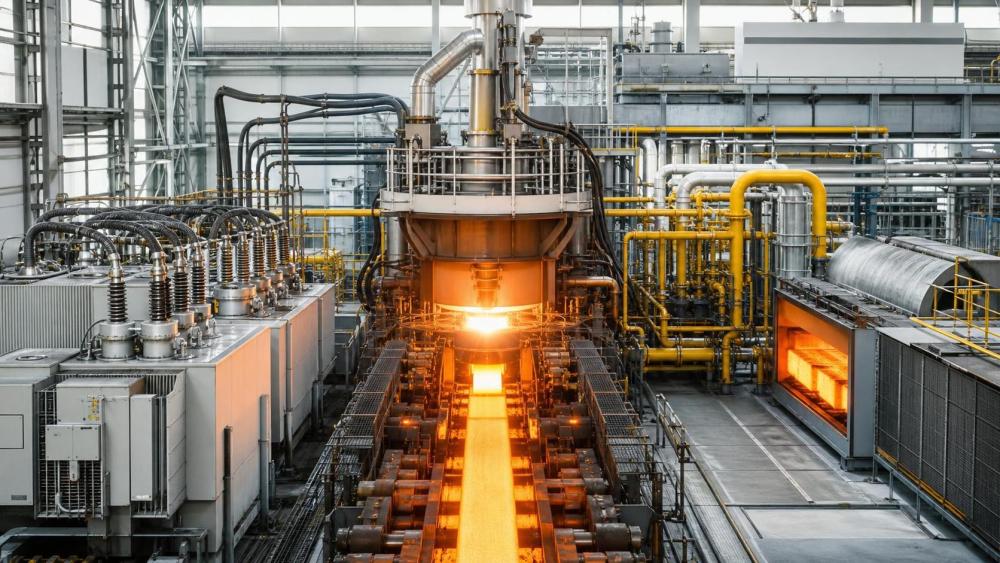
Many metallurgical processes cannot be paused simply because market prices spike. Electric arc furnaces, induction furnaces, continuous casting lines, sintering furnaces, extrusion presses, and controlled-atmosphere heat-treatment systems have technical constraints. Stopping at the wrong moment can damage equipment, compromise material properties, increase scrap, or delay delivery of qualified components.
This creates an important imbalance in negotiations. Suppliers may offer attractive time-of-use pricing or interruptible-load incentives, but these arrangements only create value if the plant can genuinely reduce or shift demand without sacrificing output, safety, quality, or customer commitments. A contract that rewards flexibility on paper can become expensive if the facility has no practical ability to use it.
4. Commodity and carbon exposure moving in different directions
Energy markets do not move as one. Electricity may be linked to gas generation in one region and hydropower availability in another. Carbon costs can affect grid power, coke, natural gas, and imported materials differently. A procurement strategy that hedges only the visible electricity component may leave the business exposed through carbon pass-through, fuel adjustments, or supplier surcharges embedded in metals and refractory materials.
For producers serving automotive, aerospace, defense, renewable energy, or battery supply chains, this exposure increasingly reaches customer negotiations. Buyers may ask for product-level emissions information, low-carbon sourcing evidence, or transparency around energy inputs. If those requirements emerge after a contract is signed, the cost of changing supply arrangements can be significant.
5. Supply disruption and forced substitution
Supply disruptions do not always mean a complete outage. A reduction in contracted gas pressure, a transmission constraint, an unexpected power curtailment, or the loss of a transport route can force a facility to buy replacement energy at short notice. In severe cases, plants may turn to backup fuels or smaller suppliers with less favorable terms.
Metallurgy adds another layer of difficulty: replacement energy must be compatible with process requirements. A change in gas quality, hydrogen availability, electricity reliability, or furnace atmosphere can affect oxidation, decarburization, hardness, grain structure, porosity, and surface finish. The procurement cost is therefore only part of the loss. Requalification, lower yields, delayed shipments, and customer claims may follow.
Contract language often determines whether a market shock becomes a dispute
When prices rise sharply, parties tend to discover whether their agreement was written for ordinary conditions or for real operational stress. Ambiguous clauses are a major driver of unplanned cost because they delay decisions precisely when a facility needs clarity.
Several provisions deserve close attention in metallurgy energy procurement contracts:
- Indexation definition: Identify the exact market index, publication source, currency, averaging period, and adjustment timing.
- Pass-through charges: Specify which taxes, grid fees, carbon costs, balancing charges, and regulatory costs may be passed through, and whether any are capped.
- Volume flexibility: Set realistic tolerance ranges for production swings, planned maintenance, and unexpected customer schedule changes.
- Force majeure: Distinguish genuine external disruption from ordinary market price volatility or supplier sourcing difficulty.
- Curtailment rights: Define notification periods, compensation, restoration priorities, and the customer’s right to reject interruption where critical production is at risk.
- Data and audit access: Ensure the buyer can verify invoices, loss factors, metering data, and calculations behind variable charges.
- Change-in-law treatment: Clarify how new environmental, energy, export-control, or compliance obligations affect price and performance.
None of these points is merely legal detail. For a business making single-crystal turbine materials, precision castings, copper foil, cemented carbide tools, or NdFeB magnets, a poorly defined adjustment mechanism can undermine the economics of a long-term customer program.
Risk is different across metallurgy processes
Decision-makers should resist the temptation to apply one energy strategy across all sites and materials. The exposure profile of an electric-arc steel operation differs from that of a powder sintering plant; both differ from an aluminum extrusion facility or a rare-earth separation and magnet manufacturing line.
A useful procurement review asks not only how much energy a site consumes, but also what happens when that energy becomes unavailable, expensive, or technically unsuitable for a particular production step. The answer reveals the true cost of interruption.
A practical way to reduce overrun exposure before renewal
Before renewing a major contract, leadership teams should bring procurement, plant operations, finance, engineering, legal, and sustainability personnel into the same review. This is not bureaucracy for its own sake. Each function sees a different cost that may otherwise remain invisible.
Start with a consumption map that links energy use to actual production drivers. In some facilities, tonnes produced are sufficient. In others, the meaningful drivers are furnace hours, melt campaigns, press cycles, vacuum time, thermal treatment batches, or peak-load windows. Compare this map with the existing contract’s volume commitments and pricing periods. The gaps are often revealing.
Next, build several credible operating scenarios: normal demand, reduced demand, accelerated demand, planned shutdown, and supply interruption. Estimate the commercial effect of each scenario under the proposed contract, including non-energy consequences such as scrap, delayed qualification, expedited logistics, and lost contribution margin. A contract should be evaluated by its behavior under stress, not only by its price in a stable market.
Then separate risks that should be hedged from risks that should remain flexible. Long-term fixed pricing may be appropriate for a predictable base load. More flexible arrangements may suit variable production volumes. Some companies use a layered approach, securing part of expected demand while retaining controlled exposure for the remainder. The best structure depends on liquidity, risk appetite, plant flexibility, and customer pricing arrangements—not on a universal rule.
Do not let energy procurement sit outside commercial strategy
One reason cost overruns persist is that energy procurement is sometimes treated as a back-office function, while sales teams commit to material prices and delivery schedules without a shared view of energy risk. This is particularly dangerous in contracts for long-lead aerospace alloys, defense materials, EV aluminum castings, battery copper foil, and high-performance tooling, where commercial commitments may extend well beyond the energy buying cycle.
Where possible, customer contracts should reflect the same reality as energy contracts. That does not mean passing every fluctuation directly to the customer. It means understanding which programs can absorb variation, which require escalation mechanisms, and which require a margin reserve because the energy intensity is unusually high. Transparency is often preferable to discovering an unrecoverable cost gap after production is underway.
Supplier evaluation also matters. A low energy quote from a supplier with limited storage, weak grid access, unclear balancing exposure, or no credible contingency plan may not be low cost in practice. Procurement teams should ask how a provider manages volatility, what data it supplies, how it handles curtailment, and whether it can support sites operating around the clock.
The decision standard: controllable cost, not just contracted price
The most competitive quoted rate is not automatically the lowest-risk option. In advanced metallurgy, a slightly higher energy price may be justified if it provides clearer pass-through rules, better volume flexibility, reliable quality of supply, actionable consumption data, and workable protection during disruption. Conversely, an aggressively priced agreement can become expensive when it locks a plant into unrealistic volumes or exposes it to undefined surcharges.
For executives, the central discipline is to view metallurgy energy procurement as part of material cost management, production resilience, and customer profitability. Energy is transformed into molten metal, controlled microstructures, hardened tools, lightweight structures, magnetic performance, and battery-grade conductive materials. Its cost cannot be managed well without understanding the industrial process it supports.
Organizations that connect contract terms with furnace schedules, commodity exposure, compliance obligations, and supply-chain contingency are better positioned to avoid unpleasant surprises. They may not eliminate volatility, but they can make its financial consequences visible, negotiable, and far more manageable.
Related News
- Rare Earth Material Sourcing Strategy: Key Criteria for Reducing Supply Chain RiskSep 07, 2026Rare earth material sourcing strategy: reduce supply chain risk with proven criteria for supplier evaluation, quality control, traceability, contracts, and resilient supply.
- How Can You Compare Advanced Alloy Prices Across Regions?Sep 09, 2026How to compare commodity prices for advanced alloys across different regions? Learn to assess landed cost, quality, yield, certification, and supply risk.
- When does commodity exposure management become essential for a growing manufacturer?Sep 04, 2026Commodity exposure management helps growing manufacturers protect margins, stabilize supply, and control risk amid volatile material costs. Learn when to act.
- Which price inputs should be tracked in metals price risk management?Sep 04, 2026Metals price risk management: track benchmarks, premiums, conversion, energy, freight, FX, and supply risks to protect landed costs and strengthen sourcing decisions.