
Metal smelting technology decarbonization is becoming a capital allocation question
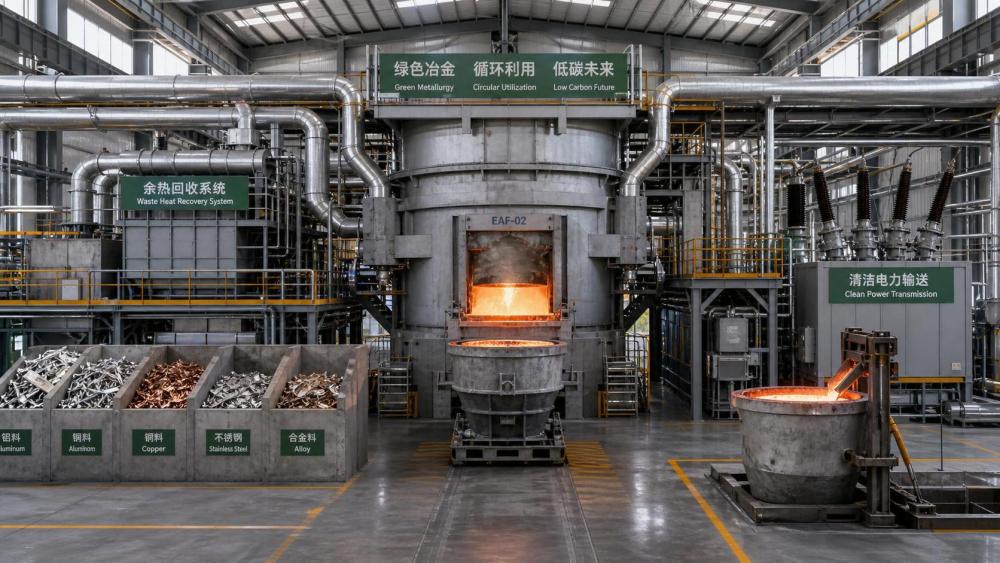
Metal smelting technology decarbonization has moved well beyond compliance language and sustainability reporting. It now shapes investment timing, asset life decisions, and supplier qualification across advanced materials markets.
That shift is especially visible in aluminum, copper, specialty steel, nickel, and alloy-intensive supply chains linked to aerospace, defense, electric vehicles, tooling, electronics, and energy storage.
The reason is straightforward. Smelting sits near the center of both emissions intensity and cost volatility, so even partial decarbonization can change margin structure, customer access, and long-term competitiveness.
Recent market behavior shows a clear split. Some routes reduce direct emissions quickly but remain hard to scale. Others scale better, yet depend on cleaner grids, raw material quality, or new furnace economics.
For companies tracking alloys, extrusion, precision casting, powder metallurgy, copper foil, carbide, and magnet value chains, the practical question is no longer whether decarbonization matters.
The real question is which metal smelting technology decarbonization routes cut emissions most without undermining metallurgical performance, throughput, certification readiness, or supply reliability.
Why this change is becoming more visible now
Several signals are reinforcing each other. Carbon pricing is one part, but it is not the whole story. Demand-side specifications are becoming more detailed and less optional.
In parallel, energy costs remain unstable in many industrial regions. Smelters that once competed mainly on scale now compete on power contracts, renewable access, scrap integration, and process flexibility.
A third signal comes from export markets and financing. Low-carbon material declarations increasingly influence customer screening, while lenders and insurers look harder at transition exposure.
Within high-performance metallurgy, the issue is even sharper. Aerospace alloys, specialty steels, battery metals, and copper products must meet strict property windows, so decarbonization cannot come at the expense of consistency.
This is where metal smelting technology decarbonization becomes an intelligence problem, not just an engineering one. Process thermodynamics, feedstock quality, certification pathways, and market access now interact more tightly.
The main forces behind faster adoption
- Cleaner electricity is more available in selected regions, making electrified routes more credible for aluminum, copper, and selected refining steps.
- Customers in mobility, electronics, and defense supply chains are asking for stronger traceability on embedded carbon.
- Recycling and circular metallurgy are improving feedstock economics, especially where scrap segregation and sorting technologies are maturing.
- Hydrogen pilots, inert anodes, carbon capture, and digital furnace controls are moving from laboratory interest toward staged industrial validation.
Which routes appear to cut emissions most
Not every pathway delivers the same outcome. The strongest emissions reductions usually come from combining process redesign with lower-carbon energy, rather than changing only one variable.
In aluminum, inert anode development remains one of the most watched metal smelting technology decarbonization routes. If scaled successfully, it can materially reduce process emissions beyond what renewable electricity alone can achieve.
For steel and selected ferroalloy systems, direct reduced iron using green hydrogen can deliver deep cuts where ore quality, hydrogen availability, and downstream electric melting economics align.
In copper and nickel value chains, electrification, oxygen efficiency, waste heat recovery, and higher scrap utilization often deliver more immediate gains than headline breakthrough technologies.
Carbon capture can be meaningful for existing assets, especially where process emissions are difficult to avoid. Still, it tends to rank lower on simplicity because transport, storage, and utilization economics vary widely.
The practical takeaway is that metal smelting technology decarbonization works best as a portfolio decision. Few operators will rely on one breakthrough route alone.
The biggest impact may come from circular metallurgy before breakthrough smelting fully scales
One of the more important market realities is that recycling often cuts emissions faster than greenfield process replacement. That is particularly true in aluminum, copper, specialty alloys, and some powder metallurgy streams.
Yet the opportunity is not unlimited. High-performance applications need exact chemistry, trace element control, and proven fatigue behavior. Scrap is valuable only when separation, remelting, and certification systems are equally strong.
This matters for sectors covered by AAMS because many advanced materials are not commodity-grade outputs. Titanium alloys, nickel-based superalloys, precision castings, copper alloys, and rare earth-linked systems carry narrow performance tolerances.
So metal smelting technology decarbonization cannot be judged by emissions reduction alone. It also has to preserve grain structure, heat treatment response, inclusion control, and downstream manufacturability.
Where operational pressure will be felt first
The first pressure point is feedstock strategy. Cleaner routes often demand better ore, better scrap, or more stable blending practices. That changes sourcing logic and inventory planning.
The second is qualification. Lower-carbon material must still pass metallurgical, thermal, and reliability tests, especially in aerospace, defense, motor, tooling, and battery-adjacent applications.
The third is data credibility. Emissions claims will increasingly need defensible boundaries, process-level measurement, and alignment with customer reporting frameworks.
Different metals will follow different decarbonization timelines
A common mistake is to discuss metal smelting technology decarbonization as though one roadmap fits all. In reality, each metal system has its own thermodynamic and commercial constraints.
Primary aluminum is highly sensitive to electricity source and anode innovation. Steel depends heavily on reduction chemistry, scrap quality, and electric arc economics. Copper faces concentration risk, energy intensity, and refining complexity.
Specialty alloys add another layer. Vacuum melting, remelting, powder production, and heat treatment can dilute the impact of one clean step if the rest of the chain remains carbon intensive.
That is why decision quality improves when emissions analysis is linked to the full metallurgy system, not just the smelter gate. AAMS is well positioned around that perspective because it connects material science, processing routes, and commercial risk.
What deserves closer attention over the next planning cycle
From a business standpoint, the best next move is disciplined comparison rather than broad decarbonization rhetoric. The most useful questions are specific and measurable.
- Which product lines have the highest embedded carbon and the strongest customer exposure to disclosure requirements?
- Which metal smelting technology decarbonization route protects metallurgical quality while cutting the largest share of direct emissions?
- Where can recycling, waste heat recovery, and digital process control deliver faster returns than major equipment replacement?
- Which sites are constrained by power contracts, hydrogen access, carbon transport, or limited scrap quality?
- How will certification, export rules, and customer qualification affect the pace of adoption?
More importantly, these questions should be answered by product family, not only by plant average. High-volume extrusion billet, battery copper foil, cast aluminum components, and superalloy feedstock have different decarbonization logic.
The strongest strategies will combine emissions cuts with market positioning
Metal smelting technology decarbonization is no longer just about reducing tonnes of CO2. It is becoming a way to protect access to premium applications and more resilient supply chain positions.
The routes that cut emissions most are not always the ones that win first. The winners are often the pathways that balance measurable carbon reduction, industrial scale, metallurgical integrity, and credible documentation.
That makes the coming period less about headline promises and more about sequence. Start with the areas where energy source, recycling quality, and process optimization already allow meaningful gains.
Then build optionality around breakthrough routes such as hydrogen-based reduction, inert anode systems, and selective carbon capture where the economics and site conditions support them.
A sensible next step is to map current emissions by process stage, compare route-specific feasibility by metal family, and monitor how qualification standards evolve across advanced materials markets.
In this environment, better decisions will come from integrated metallurgy intelligence, not from isolated carbon assumptions. That is where the real value of tracking metal smelting technology decarbonization will continue to grow.
Related News
- Rare Earth Material Sourcing Strategy: Key Criteria for Reducing Supply Chain RiskSep 07, 2026Rare earth material sourcing strategy: reduce supply chain risk with proven criteria for supplier evaluation, quality control, traceability, contracts, and resilient supply.
- How Can You Compare Advanced Alloy Prices Across Regions?Sep 09, 2026How to compare commodity prices for advanced alloys across different regions? Learn to assess landed cost, quality, yield, certification, and supply risk.
- When does commodity exposure management become essential for a growing manufacturer?Sep 04, 2026Commodity exposure management helps growing manufacturers protect margins, stabilize supply, and control risk amid volatile material costs. Learn when to act.
- Which price inputs should be tracked in metals price risk management?Sep 04, 2026Metals price risk management: track benchmarks, premiums, conversion, energy, freight, FX, and supply risks to protect landed costs and strengthen sourcing decisions.