
For distributors, roofing and cladding processors, insulation material manufacturers, transportation component suppliers, appliance panel buyers, and general fabrication workshops, aluminum coil is not a simple commodity purchase. It is a specification-driven material decision that affects processing yield, surface acceptance, delivery reliability, warehouse handling, and the buyer's ability to serve downstream customers without avoidable disputes.
The challenge is that many purchase discussions begin too narrowly. A buyer may request thickness, width, and tonnage, then compare quotations line by line. That approach can work for familiar repeat orders, but it is risky when the application, alloy, temper, surface condition, coil weight, packaging, or export route is not clearly defined. Aluminum products can be used in visible panels, heat-exchange components, packaging-related materials, trim parts, insulation jacketing, decorative surfaces, and general sheet-metal processing. Each use case places different pressure on the specification.
A good procurement decision therefore starts with the end use. Buyers should understand how the coil will be cut, slit, stamped, bent, coated, laminated, profiled, stored, and delivered to their own customer. Once those conditions are known, the purchasing team can compare suppliers on practical fit instead of only headline price.
Why Coiled Aluminum Orders Need a Procurement Framework
Aluminum is often valued for light weight, workability, corrosion resistance, and appearance, but these advantages depend on the selected material condition. If a buyer chooses the wrong alloy or temper, the coil may not form as expected. If surface requirements are unclear, the material may be rejected for visible defects even when its basic dimensions are correct. If packaging is not strong enough for export transport, surface marks or edge damage may appear before the buyer has a chance to process the material.
A procurement framework helps prevent these gaps. It turns the order from a price request into a structured decision: application, alloy series, temper, thickness, width, coil weight, surface requirement, tolerance, packaging, documentation, and supplier communication. The framework does not need to be complicated, but it should be consistent. This is especially important for buyers who serve multiple downstream sectors or import material into markets where warehouse conditions, inland transport, and customer inspection standards vary.
When the framework is clear, the supplier can respond with more useful information. Instead of simply confirming availability, the supplier can discuss whether the product is suitable for bending, roofing, decoration, insulation jacketing, transport panels, or general fabrication. That conversation lowers the chance of ordering a material that is technically available but commercially unsuitable.
Application Fit Comes Before Price Comparison
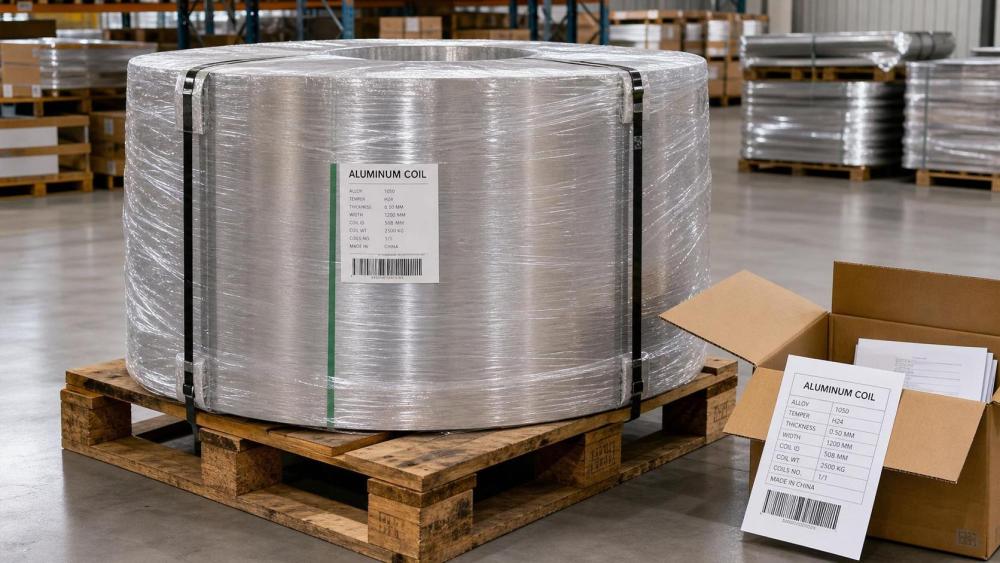
Price comparison is necessary, but it should come after application fit. For example, a buyer sourcing coil for decorative panels may prioritize surface smoothness, protective film, and color or finish consistency. A buyer sourcing for insulation jacketing may focus on thickness, roll size, handling, and corrosion resistance in the intended environment. A buyer serving fabrication workshops may care about bending behavior, flatness, edge quality, and whether the coil can be slit into narrower widths.
If these application requirements are not stated in the inquiry, quotations may look similar while representing different levels of risk. One offer may include better packaging, tighter surface control, or a more suitable temper; another may meet basic size requirements but create processing loss later. Procurement teams should therefore document the expected use case before asking suppliers to compete.
For repeat buying, application data becomes a purchasing asset. If a previous order ran well through slitting or forming equipment, the accepted alloy, temper, and surface condition should be recorded. If a customer complained about scratches, edge burrs, wave, or inconsistent appearance, those issues should be translated into clearer requirements for the next order.
Key Decision Points for Buyers
Supplier Evaluation Beyond Available Stock
Availability matters, but it is not enough. A supplier should be evaluated on its ability to understand the buyer's application, confirm the right specification, communicate production or stock details, and protect the material through shipment. Buyers should pay attention to how the supplier responds when asked about surface condition, packing method, coil labeling, and whether the product is suitable for the intended processing route.
A strong supplier conversation usually includes practical questions. What application will the coil serve? Will it be slit, bent, stamped, coated, laminated, or simply resold? Does the buyer require a smooth visible surface? How will the coil be stored after arrival? What documents are required for customs, warehouse receiving, or customer approval? These questions may look basic, but they reveal whether the supplier is thinking about the buyer's real risk.
For international buyers, communication speed and clarity also matter. Long-distance sourcing involves time zones, port schedules, documentation, and possible changes in delivery planning. If a supplier cannot confirm basic details before the order, it may become harder to solve issues after shipment. Procurement teams should treat pre-order communication as part of supplier qualification.
Managing Surface and Handling Risk
Surface condition is one of the most common sources of disagreement in rolled aluminum procurement. Buyers using material for visible parts should define acceptable appearance in practical terms. If a protective film is required, it should be stated clearly. If minor handling marks are not acceptable, the supplier should know this before packing. If the material will be painted or laminated later, the buyer should clarify whether surface cleanliness or oiling affects the next process.
Handling risk continues after delivery. Warehouses should avoid careless stacking, moisture exposure, and rough movement with equipment that can damage edges. Even well packed coils can be harmed if they are stored improperly or opened before the buyer is ready to process them. For this reason, procurement and warehouse teams should share the same expectations. The buying team should not treat packaging as a supplier-only responsibility.
When surface quality is critical, buyers can request pre-shipment photos, packing photos, and clear labels. For larger or repeat orders, it may be useful to keep a record of accepted surface examples. This creates a practical reference for future communication and helps reduce subjective disputes.
Documentation and Order Confirmation
Clear documentation protects both sides. A purchase order should state the product name, alloy or grade where applicable, temper, dimensions, quantity, coil weight preference, packaging requirement, destination, and any special surface or document needs. If the buyer relies on a sample, photo, or previous order standard, that reference should be named in writing.
Before shipment, the buyer can ask for a final confirmation of labels, packing list details, photos, and any agreed inspection steps. These checks do not guarantee that no problem will ever occur, but they reduce the chance of preventable mistakes. They also make it easier to identify the source of a problem if the shipment does not match expectations.
Procurement teams should avoid vague language such as "good quality," "standard packing," or "normal surface" when the application is sensitive. Those phrases mean different things to different companies. Better language describes the actual use, accepted surface, packing route, and measurement expectations.
Practical Procurement Checklist
- Define the final application before comparing quotations.
- Confirm alloy, temper, thickness, width, coil ID, coil OD, coil weight, and tolerance.
- Explain whether the material will be slit, bent, stamped, laminated, painted, or profiled.
- State visible surface requirements, protective film needs, and edge expectations.
- Ask for packing details that match export shipping and local warehouse handling.
- Confirm labels, documents, photos, and any pre-shipment review steps.
- Use sample checks or trial orders when entering a new application or supplier relationship.
- Record customer feedback and processing performance for future repeat purchases.
FAQ
What should buyers confirm first when sourcing coiled aluminum?
Buyers should start with the application. Once the use case is clear, they can define alloy, temper, size, surface condition, packaging, and supplier requirements more accurately.
Is the lowest price usually the best choice?
Not necessarily. A lower price can become costly if the material creates processing loss, surface rejection, packaging damage, or customer complaints. Buyers should compare total procurement risk, not only unit price.
Why do alloy and temper matter?
They influence forming behavior, strength, flexibility, and application suitability. A material that is easy to buy may still be wrong for bending, stamping, visible panels, or specific fabrication needs.
When should a buyer request a trial order?
A trial order is useful when working with a new supplier, serving a new customer segment, changing processing methods, or using the material in a visible or technically demanding application.
Final Procurement View
Sourcing coiled aluminum works best when buyers connect product specifications with real production and customer requirements. A clear decision process helps teams compare suppliers, reduce avoidable disputes, and protect downstream margins. By defining the application, confirming technical details, reviewing packaging, and documenting expectations before shipment, buyers can turn a routine metal purchase into a more controlled sourcing decision.
Editorial Review Note
This article is buyer-facing guidance for non-ferrous metal procurement teams. It avoids fabricated prices, unsupported statistics, invented certifications, and made-up project cases.
Related News
- Choosing Aluminum Forming Methods for Thin Sheet, Extrusions, and Complex PartsSep 12, 2026Metal forming for aluminum: compare thin-sheet forming, extrusion, casting, and forging to choose the right route for complex parts, performance, cost, and scalable production.
- Orange Peel Embossed Aluminum Sheet Basics for Practical BuyersSep 12, 2026A basic buyer guide to orange peel embossed aluminum sheet, covering surface pattern, alloy choice, thickness, processing, packing, and supplier checks.
- What Drives Automotive Aluminum Price: Alloy Grade, LME Trends, and EV DemandAug 22, 2026Automotive aluminum price depends on alloy grade, LME trends, scrap, energy, and EV demand. Discover what really drives quotes and make smarter sourcing decisions.
- Surface Modification Methods for Improving Wear, Adhesion, and Corrosion ResistanceAug 16, 2026Surface modification methods improve wear, adhesion, and corrosion resistance by matching treatment to alloy, geometry, and service conditions. Learn how to choose the right process and avoid costly failures.