
On July 13, 2026, a sharp move in LME nickel prices turned a market event into a practical signal for trade and procurement execution. The trigger came from a temporary tightening of Indonesian nickel ore export quotas together with an urgent order increase from a European aero-engine manufacturer, and the effect is already reaching nickel-linked inputs used in TC4 titanium powder and single-crystal superalloys. For smelters, powder producers, exporters, aerospace buyers, and gas turbine procurement teams, this matters because price volatility is now intersecting with supply allocation, quotation validity, delivery planning, and long-cycle contract decisions.
What the market move has already confirmed
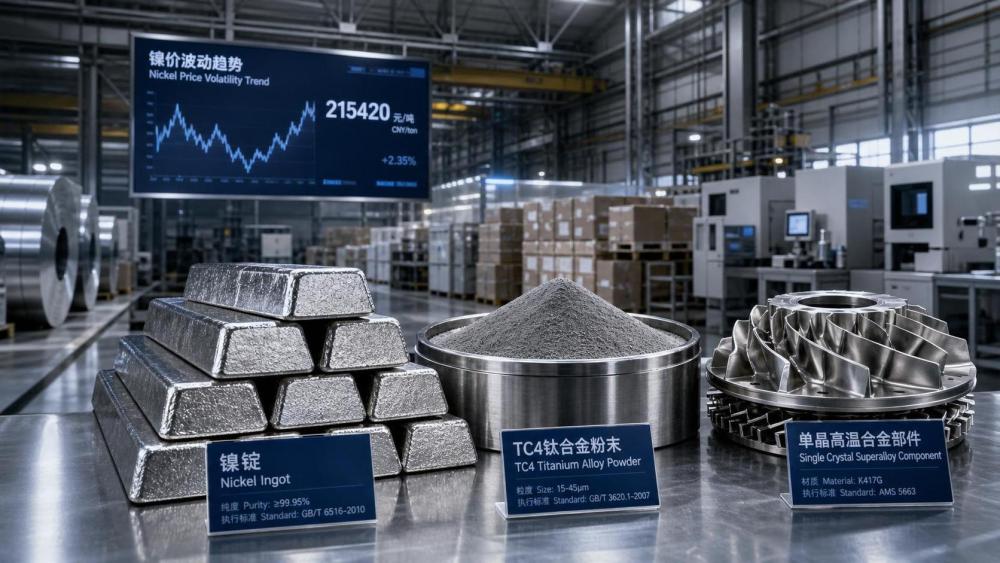
Confirmed information shows that LME nickel closed at $24,830 per ton on July 13, 2026, up 6.8% in a single day and at its highest level since October 2025. The move was linked to a temporary tightening of Indonesian nickel ore export quotas and an emergency order increase from a European aircraft engine producer. Nickel is a core input for TC4 titanium powder, which contains Al, V, and Ni elements, and for Ni-based single-crystal high-temperature alloys. The price increase is now being transmitted to upstream smelting and powder preparation stages, and several Chinese suppliers have already notified customers of Q3 price increases. Overseas aerospace and gas turbine buyers are being pushed to reassess long-cycle contract locking strategies.
Where the pressure is likely to appear first
Quotation management for upstream material suppliers
From an industry perspective, suppliers involved in smelting and powder preparation may feel the earliest pressure because nickel-linked cost changes affect how quickly quotations become outdated. The immediate business impact is likely to center on Q3 pricing notices, quotation validity windows, and the commercial terms used in ongoing offers. What deserves closer attention is whether procurement documents, technical offers, and supply agreements clearly define how raw material moves are handled during the contract period.
Long-cycle sourcing decisions for aerospace and turbine buyers
For overseas aerospace and gas turbine procurement teams, the main issue is not only higher input cost but also how pricing volatility interacts with long manufacturing and approval cycles. Where contracts were built around assumed raw material stability, buyers may need to review lock-in timing, batch scheduling, and whether supplier commitments remain aligned with the original delivery plan. In practical terms, this can affect purchasing approvals, contract amendments, and internal cost review procedures tied to qualified material supply.
Trade and delivery coordination across export-facing supply chains
Export-oriented manufacturers and supply chain service providers may also face pressure in shipment planning and customer communication. Analysis shows that when upstream suppliers revise Q3 quotations, downstream exporters may need to revisit order confirmation timing, delivery promises, and supporting commercial documentation. Even without a new formal regulation in the input, the temporary export quota tightening functions as a trade-rule signal that supply availability and pricing assumptions can shift quickly, which matters for cross-border execution.
What companies should review now
Contract language around price adjustment and validity
Analysis shows that companies should closely review whether existing and pending contracts specify quotation validity periods, raw material adjustment mechanisms, and responsibilities when upstream inputs move sharply within a quarter. This is especially relevant for products tied to nickel-sensitive cost structures and for long-cycle supply arrangements.
Technical and compliance files linked to qualified supply
Observably, buyers and manufacturers should check whether any change in sourcing rhythm or supplier allocation could affect technical files, quality records, or qualification-related documentation used in tenders and customer approval workflows. The current input does not state any change in certification rules, so this should be treated as a compliance watchpoint rather than a confirmed regulatory outcome.
Delivery planning and supplier communication for Q3 execution
What deserves closer attention is the operational side of Q3 execution: updated quotations, lead-time communication, and consistency between commercial commitments and production scheduling. Where material cost moves are already being passed through, firms may need tighter coordination between procurement, sales, and delivery teams so that price changes do not create mismatches in order acceptance or shipment timing.
Exposure in long-cycle bids and framework agreements
For companies active in aerospace and gas turbine supply, it is more appropriate to understand this moment as a reminder to review how framework agreements and long-cycle bids absorb raw material volatility. The current information does not confirm a settled market practice, but it does indicate that nickel exposure now needs closer attention in future bid terms and contract locking strategies.
Why this looks more like an execution signal than a settled rule change
Observably, this development is not only a price story. It also reflects how a trade-side constraint, in the form of temporarily tighter nickel ore export quotas, can quickly alter commercial behavior across alloy and powder supply chains. At the same time, it would be premature to treat this as a fully settled new rule environment. Analysis shows that the more accurate reading is an execution signal: suppliers are already adjusting Q3 quotations, while buyers are being forced to test whether current contracts, sourcing plans, and approval processes are robust enough for renewed raw material volatility.
How the market should read this stage
The immediate significance of this event lies in its effect on procurement discipline rather than in any confirmed long-term structural conclusion. Nickel's one-day rise and the reported pass-through into TC4 titanium powder and single-crystal superalloy inputs suggest that commercial and supply-chain terms may tighten faster than many long-cycle buyers expected. It is more appropriate to understand the situation as a live market and trade-rule development that has already influenced quotations, but whose wider impact on contract execution, supplier behavior, and downstream delivery still requires close observation.
Basis of this article and what still needs verification
This article is based on the user-provided news title, event date, and event summary. For developments of this type, relevant source categories usually include official announcements, regulator releases, customs or trade authority information, industry association updates, standards organization documents, and reporting by authoritative media. No specific official source link was provided in the input, so the exact official basis still needs to be continuously verified. Follow-up attention should remain on any further policy detail, implementation wording, certification-related interpretations, bidding document changes, market feedback, and how companies actually execute procurement and delivery adjustments.
Related News
- How to Select Cutting Tool Materials for Superalloys in High-Temperature MachiningSep 07, 2026Cutting tool materials for superalloys: compare coated carbide, ceramics, and CBN to improve tool life, surface quality, and high-temperature machining stability.
- How Does Heat Treatment Change Creep Strength in Nickel Superalloys?Sep 07, 2026How does heat treatment affect the creep strength of nickel superalloy turbine parts? Explore γ′ control, aging, cooling, and grain structure for longer service life.
- How to Select Heat-Resistant Alloy Systems for High-Temperature Exhaust ServiceAug 24, 2026Heat resistant alloy systems exhaust selection made practical: compare ferritic, austenitic, and nickel alloys for oxidation, creep, thermal fatigue, fabrication, and cost.
- Nickel-based Alloy Steel Strips for Springs, Seals, and Heat ShieldsAug 19, 2026Nickel-based Alloy Steel Strips engineered for springs, seals, and heat shields—improving heat resistance, forming reliability, and service life in demanding applications.