
On June 17, 2026, the sixth China-Europe (France) Cross-Border E-Commerce Forum was held in Paris, where a new compliance discussion moved metal materials traceability closer to the center of cross-border trade operations. The point drawing the most industry attention was the first proposal by the EU customs authority for a pilot Metal Digital Origin Passport (MDOP), aimed at high-value metal products such as NdFeB permanent magnets and single-crystal superalloys from 2027 onward. For exporters, processors, procurement teams, and supply chain service providers, the issue is not only documentation, but whether origin, energy use, processing parameters, carbon data, and certification status can be connected in a traceable digital chain.
What was formally put on the table in Paris
According to the event information provided, the forum took place in Paris on June 17, 2026. During the event, the EU customs authority raised for the first time the concept of a pilot Metal Digital Origin Passport, or MDOP.
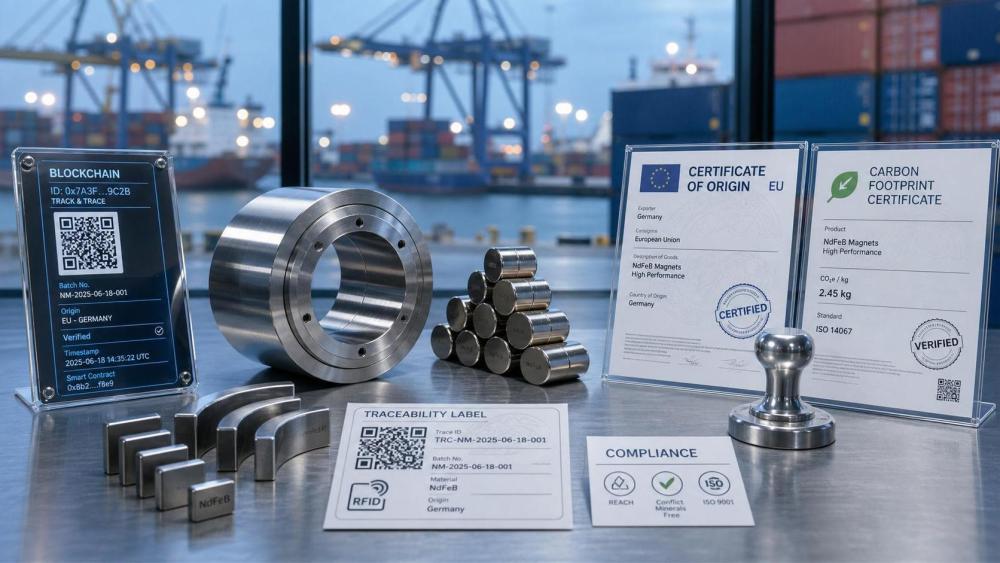
The proposal states that from 2027, certain high-value metal products, including NdFeB permanent magnets and single-crystal superalloys, would be required to embed a blockchain-based AI traceability module. The stated scope of that module covers raw material origin, smelting energy consumption, heat-treatment parameters, carbon footprint, and third-party certification status.
The same event information also shows that 12 Chinese exporters in magnetic materials and high-temperature alloys signed a joint initiative.
Where the pressure may surface across the supply chain
Export-facing manufacturers may face a deeper data burden
From an industry perspective, manufacturers directly shipping affected products into the European market may be among the first to feel the operational impact if the pilot direction moves into enforceable practice. The likely pressure point is not limited to customs filing; it extends to whether production-side information can be retained, organized, and presented in a way that matches traceability requirements tied to origin, energy use, processing, and certification.
Procurement and upstream sourcing teams may need tighter proof of origin
Analysis shows that procurement functions tied to metal inputs may also be affected because the proposed MDOP framework explicitly includes raw material origin. That means sourcing decisions may increasingly depend on whether upstream suppliers can provide consistent and verifiable records, rather than only commercial delivery terms or conventional quality documents.
Supply chain and compliance service providers may need to bridge fragmented records
Observably, service providers involved in customs, compliance support, digital documentation, and cross-border logistics may need to pay closer attention to how fragmented production and certification data are assembled. If AI and blockchain-based traceability becomes a practical requirement for covered categories, the business challenge may shift from moving goods efficiently to also moving verifiable data in a usable format.
European buyers may place more weight on traceability readiness
What deserves closer attention is that downstream buyers and sourcing teams in Europe may begin asking earlier questions about traceability preparedness for relevant metal products. Even before any full implementation outcome is known, the signal itself may influence supplier screening, technical communication, and document expectations in transactions involving high-value metal materials.
What companies should watch next
Separate the policy signal from final operating rules
Analysis shows that companies should distinguish between a pilot concept presented at a forum and final, detailed enforcement rules. The current information confirms the proposal and the intended direction, but businesses still need to watch for later official wording, scope clarification, and implementation specifics before treating every operational assumption as settled.
Map exposure by product category and market destination
For companies dealing in NdFeB permanent magnets, single-crystal superalloys, or related high-value metal exports, a practical focus is to identify which product lines and customer flows may be most exposed if MDOP-related requirements advance. This matters for export planning, customer communication, and the sequencing of internal compliance preparation.
Review whether existing records can support traceability claims
What deserves closer attention is whether current records already cover the fields named in the proposal: raw material origin, smelting energy consumption, heat-treatment parameters, carbon footprint, and third-party certification status. The issue is not only whether data exists, but whether it can be matched across procurement, production, quality, and export documentation.
Prepare for longer communication cycles with customers and partners
Observably, if traceability requirements become more detailed, exporters and supply chain teams may need to prepare for longer discussions with customers, suppliers, and service partners around documentation completeness, certification status, and delivery readiness. That preparation may matter even before any hard enforcement date arrives in day-to-day trade practice.
Why this looks like more than a routine forum statement
In analytical terms, this development is better understood as a compliance signal with potential long-tail implications rather than as a completed regulatory outcome. The significance lies in the fact that traceability is framed not simply around origin labeling, but around digitally linked production, energy, carbon, and certification information for specified high-value metal products.
It is also notable that Chinese exporters in magnetic materials and high-temperature alloys responded at the event by signing a joint initiative. That does not by itself establish the final shape of future requirements, but it does suggest that affected market participants already see the topic as commercially relevant enough to organize around.
How to read the current stage of the development
It is more appropriate to understand this news as an early but concrete directional marker for cross-border compliance in selected metal materials. The confirmed facts do not yet prove the full implementation path, but they do indicate that digital origin and process traceability is moving closer to practical trade requirements in discussions involving the EU market.
For industry participants, the near-term takeaway is not to assume immediate disruption, nor to dismiss the issue as symbolic. A more balanced reading is that this is a development that warrants continued monitoring, especially for exporters, sourcing teams, and service providers connected to covered high-value metal product categories.
Basis of this article and points for continued verification
This article is based on the user-provided news title, event date, and event summary. No specific official source link was provided in the input, so the precise official documentation behind the forum statement still requires ongoing verification.
For this type of industry update, source categories usually worth checking include official announcements, company statements, industry association releases, authoritative media coverage, and relevant standards or regulatory documents. The main follow-up points to watch are whether the MDOP pilot concept receives more detailed official wording, whether the covered scope changes, and how implementation expectations for 2027 are later defined.
Related News
- NdFeB Magnet Grades Explained: How to Choose the Right Grade for Your ApplicationSep 04, 2026NdFeB magnets grade guide: compare energy product, coercivity, temperature limits, and coatings to select the right magnet for reliable performance.
- How to confirm the correct NdFeB magnet HS code before customs filingSep 05, 2026NdFeB magnet HS code guide: learn how to classify loose magnets, assemblies, and components accurately before customs filing to reduce delays and compliance risks.
- How can importers verify NdFeB China suppliers before placing an order?Sep 05, 2026NdFeB China supplier verification guide: review factory capability, magnetic test data, coatings, samples, traceability, and export readiness before ordering.
- How to Evaluate a Permanent Magnets Supplier for Reliable Industrial SupplySep 01, 2026Permanent magnets supplier evaluation guide: compare quality, testing, coatings, traceability, and supply risk to secure reliable industrial production.