
On June 27, 2026, EASA and the Nadcap management body released a transition notice for Nadcap Heat Treatment Supplement Revision 5.2, setting a July 1, 2026 implementation point for suppliers serving EU aerospace OEMs and tier-one contractors. The notice matters not only to heat treatment providers, including certified bodies and factories in China, but also to procurement teams, manufacturing programs, and delivery management linked to aerospace metal materials, because the required upgrades in grain control, cooling-rate recording, and thermocouple calibration traceability go directly to compliance readiness for several high-specification processes.
What the transition notice formally requires
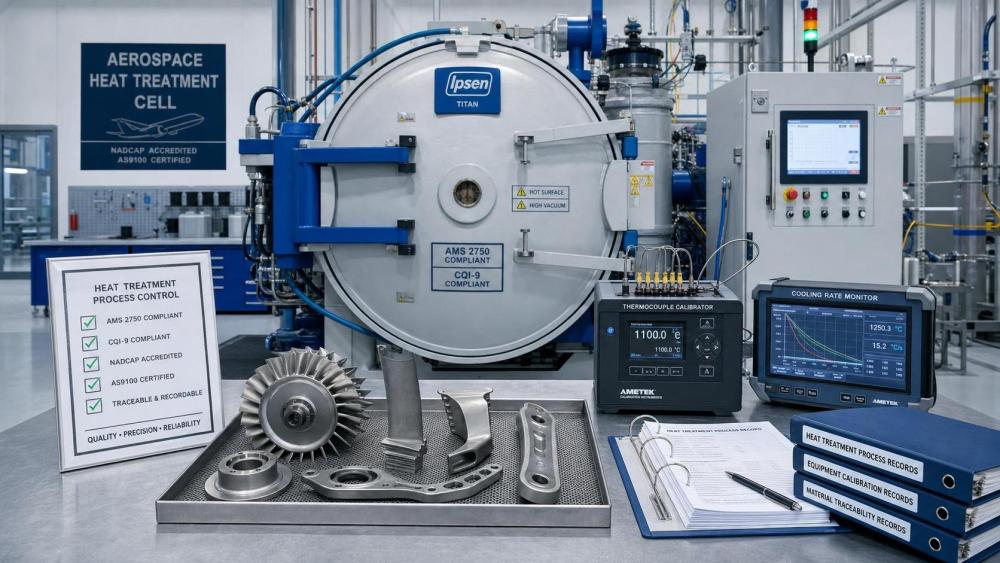
According to the information provided, the transition notice issued on June 27, 2026 concerns Nadcap Heat Treatment Supplement Revision 5.2. It states that from July 1, 2026, all heat treatment service providers supplying EU aerospace OEMs and tier-one suppliers must complete upgrades tied to three areas: grain control, cooling-rate recording, and thermocouple calibration traceability.
The scope explicitly includes Chinese certification bodies and factories when they are part of supply to EU aerospace OEMs and tier-one suppliers. The notice is described as having a direct effect on compliant delivery capability for TC4 titanium powder sintering, single-crystal superalloy blade heat treatment, and Maraging steel aging processes.
Where the operational pressure is likely to appear first
Heat treatment providers facing immediate compliance tasks
From an industry perspective, heat treatment service providers are the first group affected because the notice is framed around required upgrades to process control and traceability. The practical impact is likely to show up in documentation, process records, calibration traceability chains, and the ability to demonstrate conformity during customer review or certification-related checks.
Manufacturing programs tied to sensitive aerospace materials
Programs involving TC4 titanium powder sintering, single-crystal superalloy blades, and Maraging steel aging should pay closer attention because these processes are specifically identified in the notice summary. Analysis shows the issue is not only whether heat treatment is completed, but whether the process evidence behind that treatment aligns with the revised requirements for compliant delivery.
Procurement and supplier management on the buyer side
EU aerospace OEMs, tier-one suppliers, and their procurement functions may also feel the effect through supplier qualification and delivery acceptance. Observably, when a rule update is tied to traceability and process records, buyers typically need to verify whether existing approved suppliers have completed the necessary upgrades and whether incoming compliance documents remain acceptable under the revised supplement.
Cross-border certified factories and support organizations
The notice also matters for certified factories and related organizations outside the EU, including those in China, when they serve the relevant aerospace supply chain. The likely pressure point is the alignment between local execution, certification status, and customer expectations under the new transition requirement, especially where production and audit evidence must stay consistent.
What companies should review now
Check whether current process evidence matches the revised focus areas
What deserves closer attention is whether existing records and control methods can already support the upgraded expectations around grain control, cooling-rate recording, and thermocouple calibration traceability. The core issue is less about broad compliance claims and more about whether each requirement can be demonstrated in actual process documentation.
Reassess affected product and process lines
Companies connected to TC4 titanium powder sintering, single-crystal superalloy blade heat treatment, and Maraging steel aging should isolate those lines for review first. Analysis shows these are the most clearly exposed areas in the provided notice summary, so they are the logical starting point for internal checks, customer communication, and delivery-risk screening.
Prepare for customer-side questions on qualification and delivery
Suppliers should pay attention to how buyers may ask for updated qualification status, supporting records, or confirmation of transition completion. In practical terms, this may affect order release, document submission, delivery acceptance, and communication around lead times where compliance evidence is part of contractual performance.
Keep watching for further official wording or implementation detail
The current notice establishes a clear requirement and implementation date, but companies should still watch for any further official clarification on wording, scope, or supporting interpretation. Observably, transition notices often become more operationally important when customers begin applying them through audits, supplier reviews, and document requests.
How this should be read at this stage
Analysis shows this is more than a routine wording update because the notice ties the revised supplement to specific control and traceability upgrades with a stated implementation date. At the same time, it is more appropriate to understand this as a compliance signal with immediate operational relevance rather than a fully settled market outcome. The confirmed fact is the new requirement; the extent of downstream disruption will still depend on how quickly affected suppliers complete upgrades and how strictly customers enforce the transition in ongoing delivery programs.
Why the July 2026 deadline matters
For the industry, the main significance of this update is that heat treatment compliance is being framed through more explicit control and traceability expectations in a supply context linked to EU aerospace OEMs and tier-one suppliers. A neutral reading is that this is a short-term operational change with potential longer-term implications for supplier readiness and qualification discipline. For now, it is more appropriate to treat the development as an actionable compliance transition that warrants close follow-up rather than as a basis for broad market conclusions.
Basis of this article and what still needs verification
This article is based on the user-provided news title, event date, and event summary. For this type of industry update, commonly relevant source categories may include official notices, company announcements, industry association information, authoritative media reporting, and standard or certification organization documents. The specific official source link was not provided in the input, so further verification remains necessary. Continued attention should focus on any additional official clarification, customer-side implementation language, and how the revised requirements are applied in actual supplier qualification and delivery review.
Related News
- Nickel-Cerium Alloy Selection Criteria for High-Temperature Aerospace ComponentsSep 11, 2026Nickel cerium alloys boost thermal stability & oxidation resistance in jet engine hot sections—discover key selection criteria for aerospace reliability.
- Alloy Characterization Methods: Choosing Tests for Aerospace Material QualificationSep 11, 2026Alloy characterization methods for aerospace qualification: select chemistry, microstructure, mechanical, NDT, and environmental tests that prove service-ready performance.
- Non-Ferrous Alloy Applications: Matching Materials to Aerospace, EV, and Marine LoadsSep 10, 2026Non-ferrous alloy applications for aerospace, EV, and marine loads: compare aluminum, titanium, nickel, copper, and magnesium for durable, verified material choices.
- Which Corrosion Resistance Standards Apply to Aerospace Metals and Coatings?Sep 09, 2026Corrosion resistance standards for aerospace metals and coatings: compare ASTM, MIL, ISO, and qualification requirements for reliable, compliant performance.