
Is Tungsten Trading Still Viable Amid Geopolitical Tensions?
Is commodity trading in tungsten still viable given current geopolitical tensions? For industrial buyers, exporters, and investors, the answer depends on more than price movements. Concentrated supply, evolving export controls, and demand from carbide tooling, aerospace, and defense can reshape market access and procurement risk. Trading may remain commercially viable, but only when sourcing strategies, compliance checks, and contract terms reflect these pressures.
The practical answer is yes—with a distinction between trading a price spread and delivering usable material. A trader may identify an attractive purchase price yet lose the margin through licensing delays, rejected specifications, financing costs, or an unavailable conversion route. Conversely, a supplier offering qualified material with reliable documentation may retain business even without the lowest quotation.
This AAMS analysis examines where tungsten trade remains workable, which risks deserve closer scrutiny, and how market participants can judge a transaction before committing capital.
There Is No Single Tungsten Market
“Trading tungsten” can mean buying mineral concentrate, ammonium paratungstate (APT), tungsten oxide, metal powder, tungsten carbide powder, ferrotungsten, or recoverable scrap. These products occupy different positions in the supply chain. Their buyers, quality requirements, processing costs, and regulatory treatment are not interchangeable.
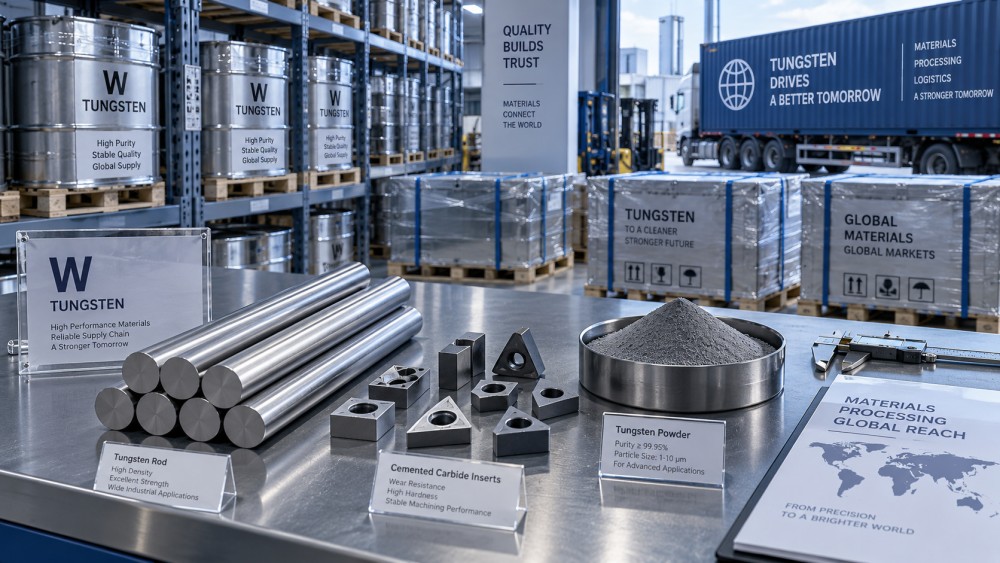
Concentrate transactions depend heavily on tungsten content, impurities, moisture, recovery assumptions, and access to a suitable processor. APT sits further along the chemical conversion chain. Powder buyers need more than chemical purity: particle-size distribution, oxygen content, and processing behavior can determine whether material works in their manufacturing route.
For cemented carbide producers, tungsten carbide powder must fit the intended grade and sintering process. Changes in powder characteristics can affect grain structure and the balance between hardness and toughness. A powder suitable for one cutting-tool application may not be an acceptable replacement for another, particularly where machining titanium alloys or nickel-based superalloys demands consistent performance.
That makes product definition the first commercial decision. Before comparing suppliers, establish exactly what is being traded, how it will be tested, and who can consume it. An apparent discount between two quotations may simply reflect different specifications, delivery terms, or contained-tungsten pricing bases.
Geopolitical Risk Appears at Several Points in the Chain
Tungsten supply is geographically concentrated, with China occupying a major position in mining and processing. The commercial consequence is not that every shipment becomes unavailable during political friction. It is that changes affecting a dominant supply base can influence several stages of the market simultaneously.
A mine outside China does not automatically create an independent supply chain. Its concentrate may still depend on a particular overseas converter, while the resulting oxide or powder may require another processor before reaching the customer. Diversification must therefore follow material through conversion and qualification, not stop at the mine address.
Export controls add another layer. Coverage can depend on the material’s technical characteristics, destination, end user, and intended application. A commercial product name or customs code alone may not resolve whether authorization is required. Relevant official control lists, customs guidance, and sanctions rules should be checked for the actual transaction; yesterday’s successful shipment is not proof that tomorrow’s shipment will be permitted.
The chain worth mapping is straightforward: material origin, chemical conversion, powder production, customer qualification, transport route, and final end use. At each stage, identify the responsible party and the evidence supporting the handoff.
Routing through an intermediary country does not automatically change origin or remove applicable restrictions. It can also introduce additional counterparties and documentation gaps. Where a proposed route depends on vague explanations about origin or end use, the problem is not merely a higher risk premium; the transaction may be unsuitable to proceed.
Industrial Demand Supports Trade, but Not Every Position
Tungsten remains commercially relevant because its properties are difficult to replace across many established applications. Tungsten carbide is widely used in cutting and wear-resistant tooling. Tungsten-containing materials also serve selected high-temperature, high-density, electrical, and defense applications, although requirements vary substantially by product.
Demand durability should not be confused with predictable short-term purchasing. Tool manufacturers can reduce inventories when industrial orders weaken. Buyers facing uncertain supply may temporarily build stocks, then purchase less once those stocks arrive. A shortage headline can therefore coexist with hesitant customers in a particular product segment.
Substitution is similarly application-specific. Ceramics, alternative tool materials, revised machining strategies, or redesigned components may reduce tungsten consumption in some settings. They are not universal replacements. Changes can alter productivity, wear life, process stability, or qualification requirements, making the economics broader than the raw-material price.
For a trader, the stronger demand signal is an identified customer with an approved specification and credible purchasing schedule. A general expectation that “defense demand will rise” is a weak basis for holding uncommitted inventory, especially when that inventory cannot easily move between customers.
Calculate the Margin After Delay, Not Just After Freight
Tungsten is not a market where every physical product has a readily available, liquid exchange hedge. Participants should not assume they can offset inventory exposure as easily as with some exchange-traded base metals. Published assessments can inform negotiations, but the benchmark must match the product, region, quotation unit, and commercial terms closely enough to be useful.
The relevant calculation is the expected selling price minus purchase cost, processing charges, transport, insurance, duties where applicable, financing, testing, and potential claims. Add the cost of realistic delays. If authorization, conversion, or customer acceptance takes longer than planned, working capital remains tied up while market prices and customer requirements may change.
Several checks make that calculation more reliable:
- Normalize quotations: distinguish gross shipment weight from contained tungsten or WO3-equivalent pricing, and confirm the applicable unit.
- Define settlement: agree on sampling, assay methods, moisture determination, and an independent umpire procedure for disputes.
- Test cash timing: compare supplier payment dates with expected customer payment, including inspection and acceptance periods.
- Stress the downside: consider delayed delivery, lower resale prices, rejected lots, and the cost of finding another qualified buyer.
Contract terms deserve equal attention. Incoterms clarify certain delivery responsibilities, costs, and risks, but do not by themselves settle ownership, payment, product acceptance, or the consequences of regulatory changes. Agreements should address licensing responsibilities, document requirements, delivery windows, and what happens if authorization is delayed or denied. Force majeure and change-in-law provisions require jurisdiction-specific legal review.
Diversification Works Only When the Alternative Is Usable
Buying from additional suppliers can reduce exposure, but counting supplier names is a poor measure of resilience. Two distributors may source from the same converter. Two mines may rely on the same processing route. A backup supplier without available capacity or customer approval is not yet a usable backup.
A stronger approach separates qualification from emergency procurement. Buyers can evaluate samples, confirm batch consistency, review traceability, and establish acceptance criteria before disruption occurs. For powder metallurgy users, this may include production trials rather than relying solely on a certificate of analysis. The appropriate testing depends on the material and application.
Recycled tungsten deserves serious consideration, particularly where carbide scrap can enter an established recovery route. It can reduce dependence on newly mined feedstock, but recycled material is not automatically available in the required form or quality. Scrap composition, cobalt content, coatings, contamination, and recovery technology influence the resulting product and its economics.
Clean, segregated production scrap presents different challenges from mixed used tooling or grinding residues. Buyers should ask who performs recovery, what output is produced, how impurities are controlled, and whether that output is approved for the intended use. Ownership and waste-shipment requirements also need checking where applicable.
Inventory can bridge some interruptions, but indiscriminate stockbuilding is expensive. Buffer stock is most defensible for qualified, regularly consumed grades with limited substitutes. Less liquid or customer-specific material can become stranded if orders change.
What a Viable Tungsten Transaction Looks Like
A viable transaction has a documented legal route, a technically acceptable product, an identifiable buyer, and enough financial room to absorb plausible disruption. The absence of any one of these can outweigh an attractive headline margin.
For industrial buyers, the central question is whether material will arrive in time and perform consistently. For exporters and traders, it is whether the entire transaction—from origin records to payment collection—remains executable. Investors need to distinguish exposure to a tungsten producer from exposure to an inventory trading business: geology, processing capability, financing, and customer access create different risks.
Global Advanced Alloys & Metallurgy Systems (AAMS) approaches these questions by connecting commodity risk with metallurgy and industrial application. Its coverage of cemented carbides, powder metallurgy, aerospace materials, recycling, and compliance helps readers examine not just where tungsten is sourced, but whether a supply option fits the manufacturing process it must support. Market intelligence should support technical and legal verification, not replace it.
Tungsten trading remains viable where participants can deliver qualified material through a compliant, financeable supply chain. Before placing the next order, confirm the product specification, conversion route, end-use documentation, licensing position, and cash exposure under delay. If profitability depends on every shipment clearing immediately and every batch being accepted without question, the trade is more fragile than its quoted margin suggests.
- powder metallurgy
- titanium alloys
- cemented carbides
- aerospace materials
- metallurgy systems
- carbide tooling
- nickel-based superalloys
- advanced alloys
- tungsten carbide
- metallurgy
- sintering process
- export controls
- commodity trading
- Is commodity trading in tungsten still viable given current geopolitical tensions?
Related News
- Metals Price Management: Fixed-Price Contracts vs. Hedging for BuyersOct 28, 2026Explore metals price management: compare fixed-price contracts and hedging to protect budgets, manage cash flow, and choose the right strategy for your metal purchases.
- SunSirs: Domestic Praseodymium-Neodymium Prices Decline on October 27Oct 27, 2026Praseodymium-neodymium prices fell on October 27, SunSirs reports. Explore key rare earth quotes and what buyers should check before revising procurement plans.
- Battery-Grade Material Prices: Comparing Quotes by Purity and Delivery TermsOct 20, 2026Compare battery grade materials price quotes by purity, assay basis, and delivery terms. Uncover hidden costs and make smarter sourcing decisions with this practical procurement guide.
- Is Tungsten Trading Still Viable Amid Geopolitical Tensions?Oct 20, 2026Is commodity trading in tungsten still viable given current geopolitical tensions? Explore supply risks, export controls, and sourcing strategies to assess margins and trade with confidence.