
On June 10, 2026, China’s Ministry of Industry and Information Technology, together with nine other departments including the National Development and Reform Commission, released an implementation plan for higher-quality development in the aluminum sector for 2025–2027. The policy sets a 2027 target of more than 15 million tons of recycled aluminum output and a recycled share of at least 55% in total aluminum alloy production, while also requiring Nadcap heat-treatment certification and low-carbon footprint declarations. This is worth close attention from aluminum processors, exporters, overseas importers, and downstream buyers in applications such as EV motor housings and aerospace brackets because it connects production structure, market access, and compliance documentation in one policy signal.
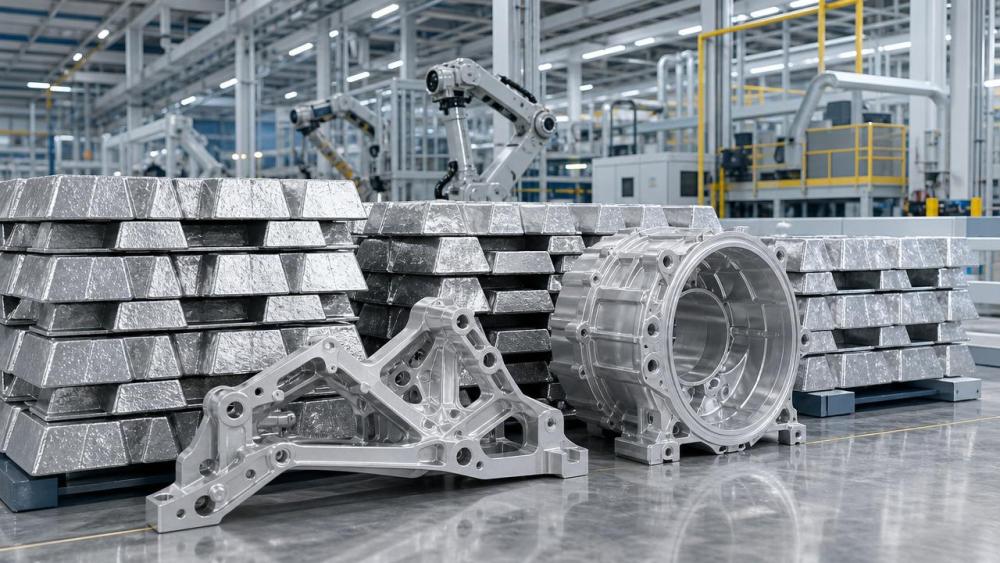
What the new plan explicitly sets out
The confirmed facts in the policy summary are clear. First, the plan was jointly issued on June 10, 2026 by the Ministry of Industry and Information Technology and nine other Chinese government departments, including the National Development and Reform Commission. Second, the policy requires recycled aluminum output to exceed 15 million tons by 2027. Third, it sets a minimum threshold of 55% for recycled aluminum’s share in total aluminum alloy output. Fourth, it makes Nadcap heat-treatment certification and low-carbon footprint declarations mandatory as supporting requirements. The policy summary also states that it will accelerate the phaseout of inefficient primary aluminum smelting capacity and reshape the export structure of high-end aluminum alloys.
Where pressure is likely to appear across the supply chain
For exporters of higher-end aluminum materials
From an industry perspective, exporters are likely to feel the impact first in qualification and documentation. The policy summary links product access not only to material supply, but also to process certification and carbon-related declarations. For companies selling into overseas industrial markets, the main issue is no longer only whether material can be supplied, but whether supporting compliance files can travel with the shipment.
For overseas importers using Chinese recycled aluminum feedstock
Observably, importers of components such as EV motor housings and aerospace brackets may face a higher entry threshold. The policy summary directly points to new access and ESG compliance barriers for buyers that rely on recycled aluminum-based inputs from China. The practical effect may center on supplier screening, contract terms, incoming documentation review, and customer-side compliance checks.
For processors and manufacturers inside the aluminum chain
Analysis shows that processors and manufacturers are likely to be affected through sourcing structure and production qualification. The stated push to remove inefficient primary aluminum capacity and raise the recycled share suggests that businesses tied to alloy output, heat treatment, and export-grade quality control will need to pay closer attention to whether their upstream and in-house processes remain aligned with the new direction.
For supply chain and procurement teams
What deserves closer attention is the operational side of compliance. Procurement and supply chain teams may need to track not only price and delivery, but also certificate availability, footprint declaration readiness, and the timing of qualification updates. In this type of policy environment, a missing document can become as important as a delayed shipment.
What companies should watch now
Follow how the certification requirement is applied
Companies should closely monitor how the mandatory Nadcap heat-treatment requirement is interpreted in actual transactions and supply arrangements. The policy signal is clear, but day-to-day business execution often depends on how customers, auditors, and counterparties apply that requirement to specific products and orders.
Check whether low-carbon declarations are shipment-ready
For businesses serving export-oriented or compliance-sensitive customers, the immediate question is whether low-carbon footprint declarations can be prepared in a usable and consistent format. This matters not only for regulatory alignment, but also for customer communication and bid or qualification processes.
Review supplier qualification and contract assumptions
Analysis shows that supplier approval standards may tighten where recycled aluminum content, heat-treatment capability, and supporting declarations are involved. Companies should re-check whether current suppliers can meet evolving documentation and process expectations, and whether existing contracts clearly define compliance responsibilities.
Separate policy direction from immediate execution risk
It is more appropriate to understand this as both a policy direction and a near-term operational issue. The headline targets point to a structural adjustment path through 2027, but the business risk may appear earlier in audits, customer inquiries, export documentation, and delivery planning.
Why this looks like more than a simple output target
As an editorial observation, this development is not only about increasing recycled aluminum volume. The inclusion of Nadcap heat-treatment certification and low-carbon footprint declarations indicates that quality assurance and carbon-related proof are being tied more closely to industrial upgrading. Observably, that gives the policy significance beyond domestic capacity structure and extends it into trade-facing compliance.
Analysis shows that the announcement is better read as a structured policy signal rather than a fully realized market outcome. The targets and compliance requirements are explicit, but how quickly they reshape supplier hierarchies, export routines, and buyer qualification standards still requires continued observation.
How this update is best understood at this stage
At this stage, the policy is best understood as a clear directional marker with immediate compliance relevance. It sets measurable recycled aluminum targets, adds process and carbon documentation requirements, and signals tighter expectations for participants connected to higher-end alloy trade. The industry significance is real, but the full commercial effect should still be assessed through subsequent implementation, customer enforcement, and supply chain response.
Basis of this article and points to verify further
This article is based on the user-provided news title, event date, and event summary related to the 2025–2027 implementation plan for high-quality development of China’s aluminum industry. For this type of development, commonly relevant source categories include official government notices, company disclosures, industry association updates, authoritative media coverage, and standard-setting documents. A specific official source link was not provided in the input, so the exact document text and any later implementing details still need ongoing verification. Follow-up attention should focus on any further official wording, detailed application rules, and how certification and low-carbon declaration requirements are enforced in actual business settings.
Related News
- Rare Earth Material Sourcing Strategy: Key Criteria for Reducing Supply Chain RiskSep 07, 2026Rare earth material sourcing strategy: reduce supply chain risk with proven criteria for supplier evaluation, quality control, traceability, contracts, and resilient supply.
- How Can You Compare Advanced Alloy Prices Across Regions?Sep 09, 2026How to compare commodity prices for advanced alloys across different regions? Learn to assess landed cost, quality, yield, certification, and supply risk.
- When does commodity exposure management become essential for a growing manufacturer?Sep 04, 2026Commodity exposure management helps growing manufacturers protect margins, stabilize supply, and control risk amid volatile material costs. Learn when to act.
- Which price inputs should be tracked in metals price risk management?Sep 04, 2026Metals price risk management: track benchmarks, premiums, conversion, energy, freight, FX, and supply risks to protect landed costs and strengthen sourcing decisions.