
Aluminium products are often purchased because they combine light weight, corrosion resistance, formability, and a clean appearance. Yet many quality disputes do not begin with the alloy itself; they begin with unclear specifications, weak packaging, poor storage discipline, or a mismatch between the coil and the buyer's production process. For distributors, fabricators, appliance panel producers, insulation material processors, roofing suppliers, and general sheet-metal buyers, Aluminium Coil should be evaluated as a working material that must survive transport, warehouse handling, uncoiling, cutting, forming, and final use.
This problem-solving guide focuses on preventable risks. It does not assume that every order requires a high-end specification. Instead, it shows how buyers can reduce common failures by asking better questions before placing an order. The goal is to connect alloy, temper, thickness, width, surface expectation, packaging, and downstream processing into one practical purchasing decision.
Problem One: The Specification Is Too Vague
A vague inquiry is one of the fastest ways to create a wrong shipment. Many buyers ask for aluminium coil by thickness, width, and tonnage, but omit alloy, temper, surface, application, coil ID, coil weight, packing method, or processing route. A supplier may still quote quickly, but the quotation may not match the actual use. When the material arrives, the buyer may discover that the coil is too soft, too hard, too narrow for the line, difficult to form, or unsuitable for the visible surface requirement.
The solution is to write the inquiry around the job the material must perform. A coil for insulation jacketing may have different priorities from a coil for decorative panels, appliance parts, cookware, roofing, trailer panels, or general fabrication. Buyers should state the application even if they are not ready to share confidential project details. A simple phrase such as "for bending and panel forming" or "for resale to roofing sheet customers" gives the supplier a better basis for recommending a suitable option.
Problem Two: Surface Expectations Are Not Defined
Aluminium coil is often used in applications where appearance matters. Surface scratches, rub marks, water stains, dents, edge damage, and uneven visual finish can create rejection even when the basic dimensions are correct. The challenge is that "good surface" means different things to different buyers. A coil that will be painted or laminated may be judged differently from a coil that will remain visible after forming.
To prevent disputes, buyers should define the surface expectation before shipment. They can ask for product photos, clarify whether protective film is needed, describe visible surface requirements, and confirm whether minor industrial handling marks are acceptable. If the material will be used in decorative or customer-facing parts, the inquiry should be more specific. If the coil will be further processed, the buyer should explain whether the processing will remove, cover, or expose the original surface.
Problem Three: Temper and Forming Needs Do Not Match
Forming problems are often caused by a mismatch between material condition and process. A coil that is easy to source may not behave well in bending, deep drawing, stamping, roll forming, or slitting if the temper is not suitable. The buyer may see cracking, springback, uneven forming, excessive tool wear, or inconsistent finished parts. These issues can be expensive because they appear after the material is already in production.
Buyers should describe the forming process in the inquiry. If the material will be bent to a tight radius, stamped, punched, or rolled through a continuous line, the supplier needs to know. The buyer should also consider whether a trial quantity is needed before a larger order. A small trial can reveal practical processing behavior that a quotation sheet cannot fully explain.
Problem Four: Packaging Is Treated as a Small Detail
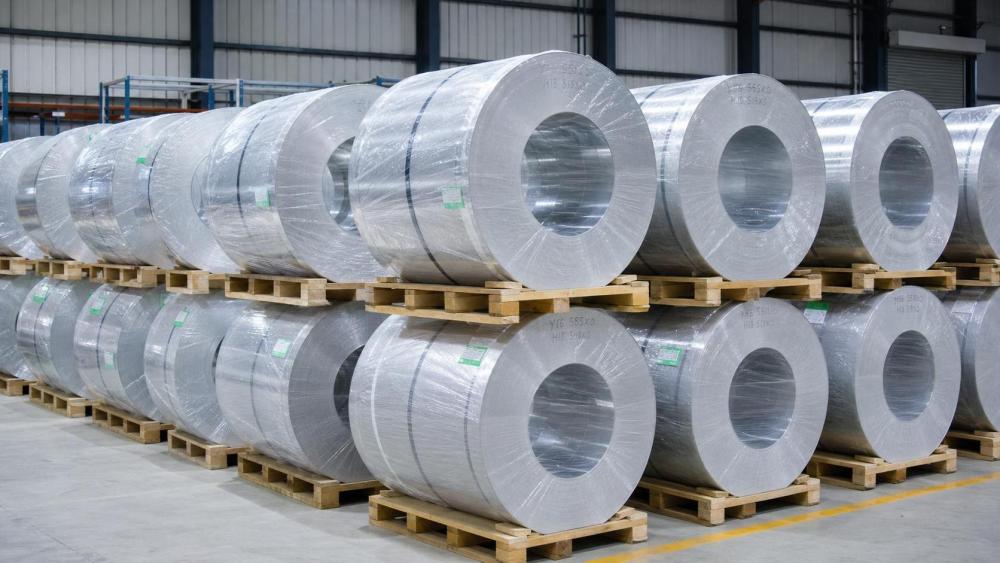
Packaging can decide whether a coil arrives ready for production or already compromised. Aluminium can be vulnerable to dents, moisture marks, edge damage, and surface abrasion if packing is not suited to the shipping route. Long-distance export shipments may involve port handling, container movement, inland trucking, and warehouse unloading. Each step creates risk if the coil is not properly protected and identified.
Buyers should discuss waterproof wrapping, edge protection, inner and outer diameter support, pallet or skid requirements, bundle labeling, and whether the coil will be stored for a long period after arrival. They should also confirm how the material will be lifted and moved. If the receiving warehouse lacks suitable equipment, the buyer may need to specify coil weight and packing orientation more carefully.
Problem Five: Storage Conditions Are Ignored After Delivery
Even well-packed aluminium material can suffer if storage is careless after arrival. Moisture trapped between layers, sudden temperature changes, rough movement, or prolonged outdoor exposure can create avoidable quality problems. Buyers sometimes blame the material when the real issue is receiving and warehouse discipline.
A simple receiving process can reduce risk. Inspect the packaging condition when the shipment arrives. Check labels against the packing list. Move coils to a dry, clean area. Avoid leaving wrapped coils in a humid environment for too long if there is condensation risk. Separate different specifications clearly. If visible surface matters, create a record of the condition before internal handling begins. These steps are basic, but they are often the difference between a smooth production run and a complaint cycle.
Problem Six: The Buyer Does Not Test Before Scaling
When a buyer is introducing a new alloy, temper, supplier, thickness, or application, a trial order can be valuable. Testing does not need to be complicated. The buyer can run material through the intended slitting, cutting, bending, stamping, or forming process and record the results. The trial should check surface response, feeding behavior, edge quality, forming stability, and finished-part acceptance.
Trial feedback should be shared internally. Purchasing, production, quality control, and warehouse teams may each see a different part of the risk. If the material runs well, the buyer can place a larger order with more confidence. If problems appear, the buyer can adjust specification details before committing to volume.
Buyer Checklist for Reducing Aluminium Coil Risk
- State the end use and processing route, not only thickness, width, and quantity.
- Confirm alloy, temper, surface expectation, coil ID, coil weight, and width tolerance.
- Explain bending, stamping, slitting, roll forming, painting, lamination, or visible-surface needs.
- Ask for packaging details suitable for export transport and warehouse handling.
- Check whether protective film, waterproof wrapping, or stronger edge protection is required.
- Plan receiving inspection before the shipment reaches the warehouse.
- Separate material by label, specification, and batch to avoid inventory confusion.
- Use a trial order when introducing a new supplier, specification, or production application.
FAQ
Why is application information important when buying aluminium coil?
The same general product name can cover very different uses. Application information helps align alloy, temper, surface, thickness, packaging, and processing suitability with the buyer's real production need.
What should buyers check first when surface quality matters?
Buyers should define the visible surface requirement, ask whether protective film is needed, confirm packaging protection, and inspect the material upon receipt before internal handling changes the original condition.
Is a specific product page better than a category page for this topic?
Yes. When the article focuses on one product type, a specific product page gives readers a clearer reference and keeps the anchor text aligned with the material being discussed.
When should a trial order be used?
A trial order is useful when the buyer is changing supplier, alloy, temper, surface requirement, or processing method. It helps confirm practical line performance before a larger purchase.
Editorial Review Note
This article is buyer-facing problem-solving guidance for nonferrous metal coil procurement. It avoids fabricated prices, unsupported market-size claims, invented customer cases, and unverified certification statements.
Related News
- Choosing Aluminum Forming Methods for Thin Sheet, Extrusions, and Complex PartsSep 12, 2026Metal forming for aluminum: compare thin-sheet forming, extrusion, casting, and forging to choose the right route for complex parts, performance, cost, and scalable production.
- Orange Peel Embossed Aluminum Sheet Basics for Practical BuyersSep 12, 2026A basic buyer guide to orange peel embossed aluminum sheet, covering surface pattern, alloy choice, thickness, processing, packing, and supplier checks.
- What Drives Automotive Aluminum Price: Alloy Grade, LME Trends, and EV DemandAug 22, 2026Automotive aluminum price depends on alloy grade, LME trends, scrap, energy, and EV demand. Discover what really drives quotes and make smarter sourcing decisions.
- Surface Modification Methods for Improving Wear, Adhesion, and Corrosion ResistanceAug 16, 2026Surface modification methods improve wear, adhesion, and corrosion resistance by matching treatment to alloy, geometry, and service conditions. Learn how to choose the right process and avoid costly failures.